
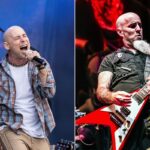


Stryper frontman Michael Sweet found himself on the receiving end of fan criticism after sharing a news article about rockers facing public backlash for making political statements on stage, as reported on his Facebook post.

Sweet shared a headline reading “Rocker Backlash Shows Americans Have Had Enough of Celebrity Lectures.” The headline appeared to reference artists like Bruce Springsteen and The Black Crowes’ Chris Robinson, who have faced public pushback for voicing political opinions during live performances. In the caption of his post, Sweet wrote:
“I could have sworn that some other ‘rocker’ said something about this recently.”
However, some fans were quick to point out that Sweet himself had not stayed silent during the elections. A Stryper fan commented on the post:
“You literally voiced your own opinions too during the elections. And you caught some heat for it too. But at the end of the day, we all have the right to our own opinions. No matter what we do for a living.”
Sweet responded by drawing a distinction between sharing personal opinions and making political speeches from the stage to a paying audience.
“That’s not what they’re talking about and that’s not what I’m talking about,” Sweet replied. “It’s perfectly great and fine to voice your own opinions, but when you go up on stage and rant and rave to a crowd of people that paid to come see you perform music — that’s not what most people want. That’s what I’m talking about and that’s what this article is talking about.”
The exchange highlights an ongoing debate within the rock community about the boundaries between personal expression and professional performance. Sweet’s comments did not emerge in a vacuum — the Stryper frontman has been a consistent and vocal critic of musicians who use concert stages as political platforms. His latest post appears to be part of a broader pattern of speaking out on the issue.
Rock Celebrities reported that Sweet has publicly stated that rockers are “shooting themselves in the foot” by getting political. He argued that mixing music with political messaging risks alienating a significant portion of their fanbase. His position has consistently been that concerts are not the appropriate venue for political discourse, regardless of which side of the aisle an artist falls on.
As Metalhead Zone noted, Sweet has gone as far as boycotting politically divisive rockers. He questioned why any artist would want to alienate half of their fanbase. His stance reflects a philosophy that musicians should prioritize their craft over political grandstanding when performing for a paying audience.
The irony, as many fans noted, is that Sweet’s own political commentary during the elections placed him in a similar position to the artists he has criticized. He maintains there is a meaningful difference between personal social media posts and on-stage political rants. However, the distinction has not fully satisfied his critics, who argue that any public figure using their platform to push a political agenda is engaging in the same behavior — regardless of the medium.
The debate underscores a tension that has grown increasingly prominent in the rock world: where does an artist’s right to free expression end and their responsibility to their audience begin? For Sweet, the answer is clear — the stage is for music. But as his own fans have pointed out, that line can look different depending on who is drawing it.


