



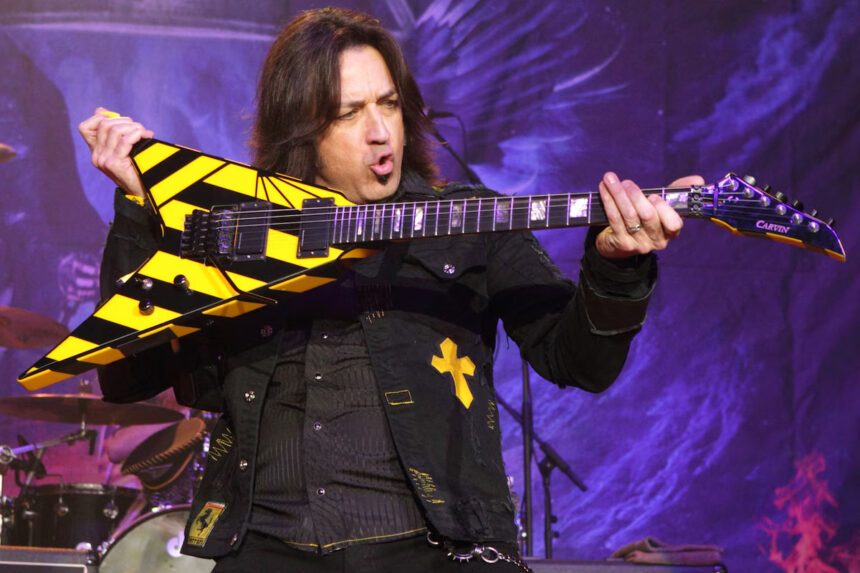
Stryper frontman Michael Sweet has sparked discussion after publicly calling out rock stars who use their concerts for political rants. He shared his thoughts in a post on his Facebook page.

Sweet’s post urged musicians to focus on unity rather than division, arguing that political rhetoric on stage alienates the very fans who support them financially and emotionally.
“Here’s a thought (to all the rock stars out there who rant and rave politically on stage): Write songs that bring people together. Songs that tear down walls. Songs that unify. Songs that inspire both sides to do better,” Sweet wrote. “Instead of tearing down the other side, encourage the people who pay to watch you perform. Who buy your albums. Who watch your videos. Who invest in your music. Give them something positive and productive instead of the same old rhetoric that divides and alienates your fan base.”
When a fan pushed back, noting that any person — rock star or otherwise — has the right to speak up on issues important to them, Sweet clarified his position further.
“But you’re missing my point. My point is that this country needs unity. Not division. We are 50 United States. Not 25,” Sweet responded. “When rock stars get on stage and divide the country and disrespect 50% of the country who are buying their albums and buying their tickets to go to the shows, why do you want to get up on stage and alienate half of your fan base?”
Sweet also revealed that the issue is personal for him, having stopped listening to certain artists over their divisive rhetoric.
“I won’t listen to certain artists anymore. I’m done listening to those artists. So to me that is shooting yourself in the foot,” he continued. “But what’s more important is to unite people and to encourage people and inspire people and give people hope. Not go up on stage and belittle and degrade and disrespect half of your fan base. That’s just insane. That was my point. That was the message behind my post.”
Sweet also clarified that his bandmate Oz Fox’s political outspokenness is his own personal business and entirely separate from what takes place on stage.
Sweet’s latest remarks are consistent with a broader pattern of public commentary that has defined his career beyond the music itself. While he has long advocated for keeping the concert stage a space for inspiration rather than division, his willingness to speak out on public matters has not always been without consequence.
As Darkside.ru reported, Sweet previously lamented the amount of negativity he received from supposed fans based on his own political views — a somewhat ironic parallel to the very dynamic he is now criticizing. The backlash he experienced firsthand appears to have shaped his conviction that musicians, regardless of their personal beliefs, risk damaging their relationship with their audience when they bring divisive rhetoric into their art.
The tension between artistic expression and political commentary is not a new one in rock music. Sweet’s comments reflect a long-running debate within the industry over where to draw the line between using a platform for advocacy and preserving the broad, inclusive appeal that sustains a career. Sweet’s position is clear: the stage should be a place that lifts people up, not one that draws battle lines.
Stryper, the Christian metal band Sweet has fronted since the early 1980s, has built its identity around messages of faith, hope, and unity — values that clearly inform Sweet’s perspective on how artists should engage with their audiences. Ultimate Metal noted that the band recently released a new single titled “I’m Alright (I’m Okay),” reaffirming their standing as one of the most influential and enduring acts in rock. Sweet attributes that longevity, at least in part, to staying focused on music that connects rather than divides.
Sweet’s comments have reignited a conversation that shows no signs of fading. As political polarization continues to shape public life, the question of whether rock stars should use their platforms for political messaging — and at what cost — remains as relevant as ever. For Sweet, the answer is straightforward: the fans who buy the tickets and the albums deserve better than to be lectured or alienated. Any artist who fails to recognize that is, in his own words, simply shooting themselves in the foot.


