



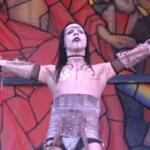



Tool and Puscifer’s Maynard James Keenan recently opened up about his struggles with stage fright. He revealed the terrifying nature of live performances in an interview with 101 WRIF.

The discussion centered around Keenan’s self-doubt and his experience with stage fright during live shows. When asked directly about whether he experiences stage fright and what it’s like when he goes on stage, the vocalist provided a candid response.
“That’s terrifying. Every night, every night is terrifying. You don’t know how it’s going to go,” Keenan said.
He went on to explain his perspective on the unpredictable nature of live music and why audiences should embrace the experience.
“It’s a challenge, but that’s what live music is, right? That’s why you’re going to see it. We’re literally alive right now. We might not be alive tomorrow. So, that’s why I would encourage you to come to the show because you don’t know what you’re getting tomorrow,” he continued.
This revelation comes after Keenan previously discussed his struggles with self-doubt. He stated he has “crippling self-doubt” and difficulty accepting compliments from others.
Keenan’s admission about stage fright provides insight into the complex relationship between his psychological state and his distinctive performance approach with Tool.
The vocalist’s unique stage positioning has become a defining characteristic of Tool’s live shows. Loudwire reported that Keenan positions himself at the back of the stage specifically to maintain visual connection with his bandmates. He explained that this placement allows him to see what’s happening and take cues from other members. This strategic positioning helps him manage the technical demands of performing while dealing with his admitted anxiety.
The back-stage setup also serves practical purposes beyond band communication. Metal Injection noted that his positioning helps the front-of-house engineer create a better mix. Tool’s instrumentation is extremely loud and having the vocalist at the front would complicate the sound engineering process.
“The position up top is also great, visually, because I can see what’s going on. We can connect with each other by looking at each other. If I was facing the audience, my back would be to what’s happening, so I can’t take cues,” Keenan explained in a previous interview.
Keenan has also discussed adapting his performance style to accommodate the realities of aging and vocal changes. Loudwire detailed how he emphasizes the importance of adjusting approaches rather than forcing performances that no longer work. He stated that performers must pivot and find solutions that do work rather than putting their worst foot forward on songs they can’t deliver effectively.


