



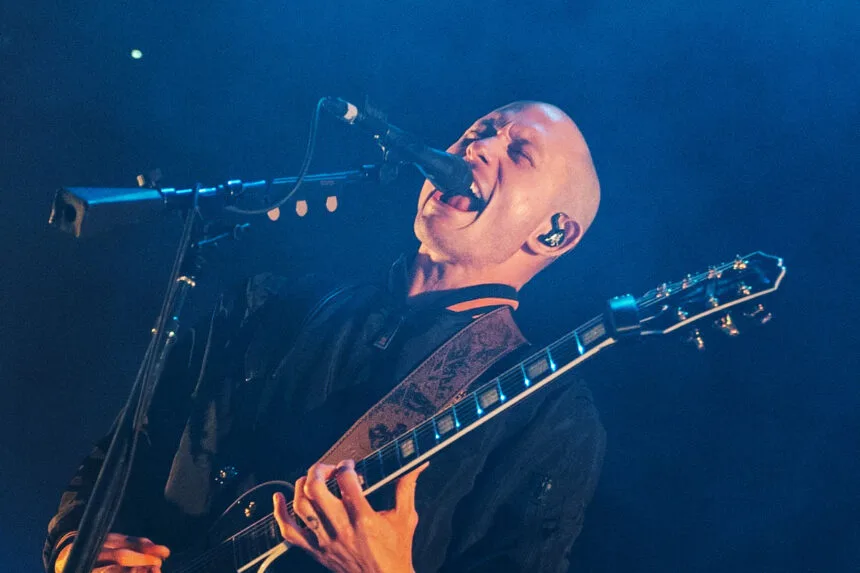
Trivium frontman Matt Heafy has spoken about the early years of his band, when they faced bullying from some of his musical heroes. He shared these comments in an interview with Rock Feed.

Heafy explained how he came across as cocky when Trivium started out, and how this attitude caused friction with established bands in the scene. He described a difficult period in which some of his favorite musicians treated the band poorly, both publicly and privately.
“I did come out guns blazing, cocky,” Heafy said. “But nowadays that is championed when people come out saying that the best people love it. But I came out like that, you know, in a time maybe we’re supposed to be humble. I came out saying I want to headline arenas when I’m older, and I’m 18 years old, and I don’t give a f*ck and we’re great. And I think that freaked a lot of people.”
The bullying came from multiple sources. “All of my favorite bands who didn’t really know me were like, ‘F*ck that band,'” he said. “When we tour with a lot of our favorite bands, we get bullied. But by bands themselves, to our faces, really from their fans.”
Heafy chose not to name the bands involved, explaining that he understood people change over time. “I’ll never call it out by name because you know I understand people change and I understand maybe people were younger or maybe they were jealous,” he continued. “Maybe they were going through something in their own stuff but I mean we had it rougher than everyone else that I think that has ever had. I mean, imagine having your favorite bands ever talking to you to your face about how much they dislike you as a person and your band.”
The Trivium frontman acknowledged that he has talked about these experiences before. “It sucks cuz we grew up with these bands, posters, t-shirts,” he said. “Now, the place I am today, I know that I’ve talked about a couple things. So maybe, and I’m not saying this out of spite or saltiness, but maybe people go, ‘Wow, Matt keeps bringing this up. This obviously does bother him.’ But no, the place I am now, I’m very happy all this stuff happened to me because it led me to where it had to lead me.”
Despite the hardship, Heafy saw value in what his band went through. “Again, I don’t wish it on anyone else, but we did have it harder,” he added. “There was a much harder trial by fire we had to go through. I think that’s why we’re so close.”
Heafy made these remarks while reflecting on Trivium’s early years in the music industry.
The backlash Heafy describes stemmed largely from the band’s breakthrough success in the mid-2000s. When Trivium released their second album Ascendancy in March 2005 on Roadrunner Records, the band quickly built momentum by playing the opening slot on the main stage at Download Festival in Castle Donington, England in 2005, a performance that helped launch them into the international spotlight. UK media outlets, including Kerrang!, heavily promoted the band as one of the hottest new acts in metal, calling them the hottest metal band of the century on a magazine cover.
This early hype created resentment from peers worldwide. Other bands and musicians resented claims that Trivium would become the next Metallica without having paid proper dues. During a UK tour, bands they traveled with treated them poorly. At Ozzfest, staff members bullied the band by driving golf carts at them and shooting dirt in their faces. The press attention lasted nine to ten months before turning sour, leaving Trivium isolated within the industry.
The situation worsened around the time of their 2006 album The Crusade, when media criticism intensified and the band had few allies. Heafy later acknowledged that some of the backlash was warranted after learning that members of their own crew had been disrespectful to other acts. One bright moment came when Papa Roach’s Jacoby Shaddix approached Heafy backstage at Download and offered support, telling him to dismiss the critics and stay true to themselves.
Years later, the band’s reputation shifted as they proved their staying power. When Trivium toured on a co-headlining bill with Slayer alongside Mastodon and Amon Amarth, Brent Hinds from Mastodon came to Heafy in their dressing room to tell him that the band had earned respect through their years of hard work. By 2017, with the release of The Sin and the Sentence, Trivium had reclaimed the quality of their earlier work, marking a turning point in how peers and fans viewed them.