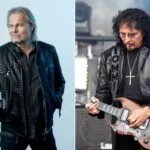
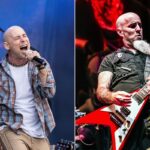


Blink-182’s Mark Hoppus shared his perspective on touring with Green Day and their subsequent rivalry in an interview with NME.

He reflected on the dynamic between the two bands during their co-headlining tour. Blink-182 was positioned as the closing act despite Green Day’s established status in the punk rock scene.
“I was a huge Green Day fan, then we’re touring with them, but it was a weird thing where Green Day were dipping at the time and Blink were ascendent,” Hoppus said. “We were billed as co-headliners, but Blink were closing every night. It was a strange sensation for us. Headlining over your idols is a little strange.”
The personal relationships remained positive between the bands despite the competitive atmosphere.
“My wife and Billie [Joe Armstrong]’s wife were great friends. Billie was super nice to us,” he continued. “Then, when it came time to get on stage… It’s like athletes: we could be on different teams, but when we get on the field we’re going to try and kick your ass.”
The friendly rivalry enhanced both bands’ performances.
“We didn’t come with that attitude, but they did. They blew us off the stage the first few nights. We were like, ‘Oh shit, we have to up our game’. Then it was this battle back-and-forth about who could put on the better show and who could win people over,” Hoppus explained. He added playfully, “I think I inspired them so much they were like, ‘We have to kill Blink-182 with an awesome album called ‘American Idiot’.”
The competitive spirit between the two bands peaked during their historic Pop Disaster Tour in 2002. This proved to be a pivotal moment for both groups.
A report from AXS TV revealed the tour spanned approximately two months and included 47 shows. The backstage atmosphere alternated between camaraderie and confrontation. Blink-182’s album “Take Off Your Pants and Jacket” had reached No. 1 on the charts, which intensified the dynamic between the bands.
The tour’s competitive environment transformed both groups’ trajectories. AXS TV noted that the rivalry motivated Green Day’s reinvention. This led to “American Idiot,” which marked their dramatic comeback and reshaped punk rock in the 2000s.
The relationship between the two bands extended beyond the tour. Far Out Magazine highlighted Green Day’s significant influence on Blink-182’s early musical development. Albums like “Dookie” (1994) and “Nimrod” (1997) helped shape the pop-punk wave that Blink-182 would later dominate.
The bands now maintain a respectful distance. Their shared history and competitive spirit during the Pop Disaster Tour remains a significant chapter in punk rock history. This rivalry demonstrated how competition can spark creative evolution in music.