




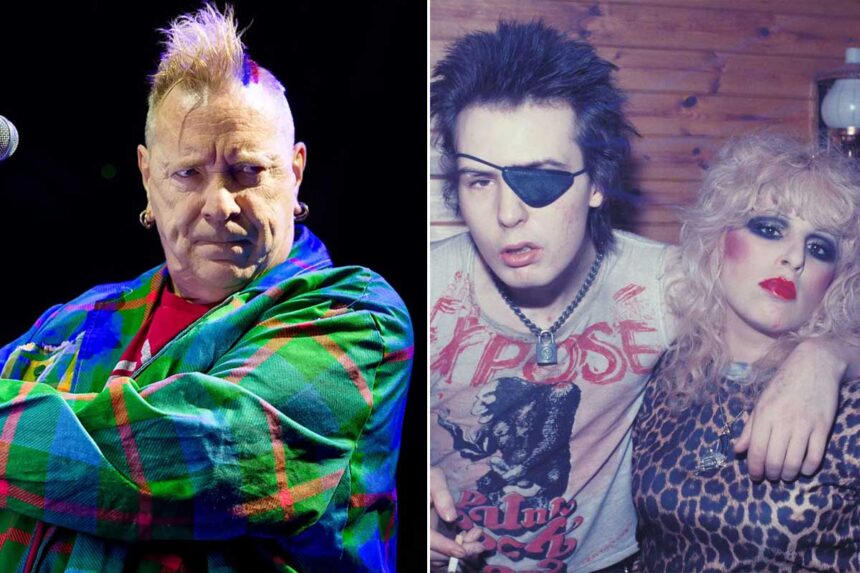
Former Sex Pistols frontman John Lydon addressed longstanding questions about Sid Vicious’ alleged role in the 1978 death of his girlfriend, Nancy Spungen, in a conversation shared on Lyndsanity! with Lyndsey Parker.

Lydon reflected on the chaotic period surrounding Vicious’ final months, describing the difficulties he faced trying to help his former bandmate and touching on the circumstances that led to Vicious developing a heroin addiction while on tour.
When asked, “Were you surprised by how things ended with Sid and with Nancy?” Lydon responded:
“Bad and sickened and too many people blocking any access I had to him and that that was upsetting and and to find out this is just quite amazing that Mick Jagger put some money and some lawyers in to helping Sid’s case. So, you know, that’s some kind of respect I’ve got there for that fella,” Lydon said.
“Cuz he knew we were struggling at that point. And I couldn’t raise no money to help Sid. You’ve got the management there blocking me. Oh, dreadful stuff. Well, they wanted to highlight the heroin addiction of it because for Malcolm, I suppose that was a selling point. It was about destruction rather than creation,” he continued.
Lydon went on to suggest that someone deliberately supplied Vicious with drugs during the band’s American tour, though he stopped short of naming names.
“I’m not going to point any fingers here but I think you know who really upset me about instigating that particular Sydney situation. He was fine with me on the tour bus in America and then we get to San Francisco and suddenly he’s found a load of heroin like no that’s, you know, that had to be given you know who gave? I don’t know,” Lydon said.
The interviewer then asked directly, “I mean I don’t know how much you want to speak to this, but there are con I don’t know if the words conspiracy theories, but there are different speculations. Do you believe Sid did it? I’m sorry if I’m asking such a bull question. You are completely free to not answer it.” Lydon replied:
“How would I know? That man, he was so not violent. He was so gentle and such a well a big wuss bag really. And he couldn’t cut his way out of a crisp bag,” Lydon said.
“That violent aspect they tried to portray is not the Sid I know. It’s just not right. And that upsets me. If there was ever a brawl with Sid be the first to run,” he added.
Lydon’s comments revisit a case that has remained shrouded in mystery for decades. It came to a devastating conclusion just months after Spungen’s death.
Nancy Spungen was found dead on October 12, 1978, in the bathroom of the Chelsea Hotel room she shared with Vicious, killed by a single stab wound to the abdomen. Police charged Vicious with second-degree murder in connection with her death. He always maintained he had no memory of what happened that night, having been in the grips of a heavy drug binge.
Vicious never stood trial. He died of a heroin overdose in February 1979 while out on bail. His death closed the case for good and left the true circumstances of Spungen’s death unresolved to this day.
The unanswered questions surrounding that night have fueled speculation for more than four decades, with theories ranging from Vicious being solely responsible to others suggesting a third party may have been involved. Lydon’s account adds another layer to that debate. He claims someone supplied Vicious with heroin during the tour and insists violence was never part of his former bandmate’s character.
Vicious died at just 21 years old, cutting short a life that had already been consumed by addiction and tragedy in the final year of the Sex Pistols’ turbulent run.


