






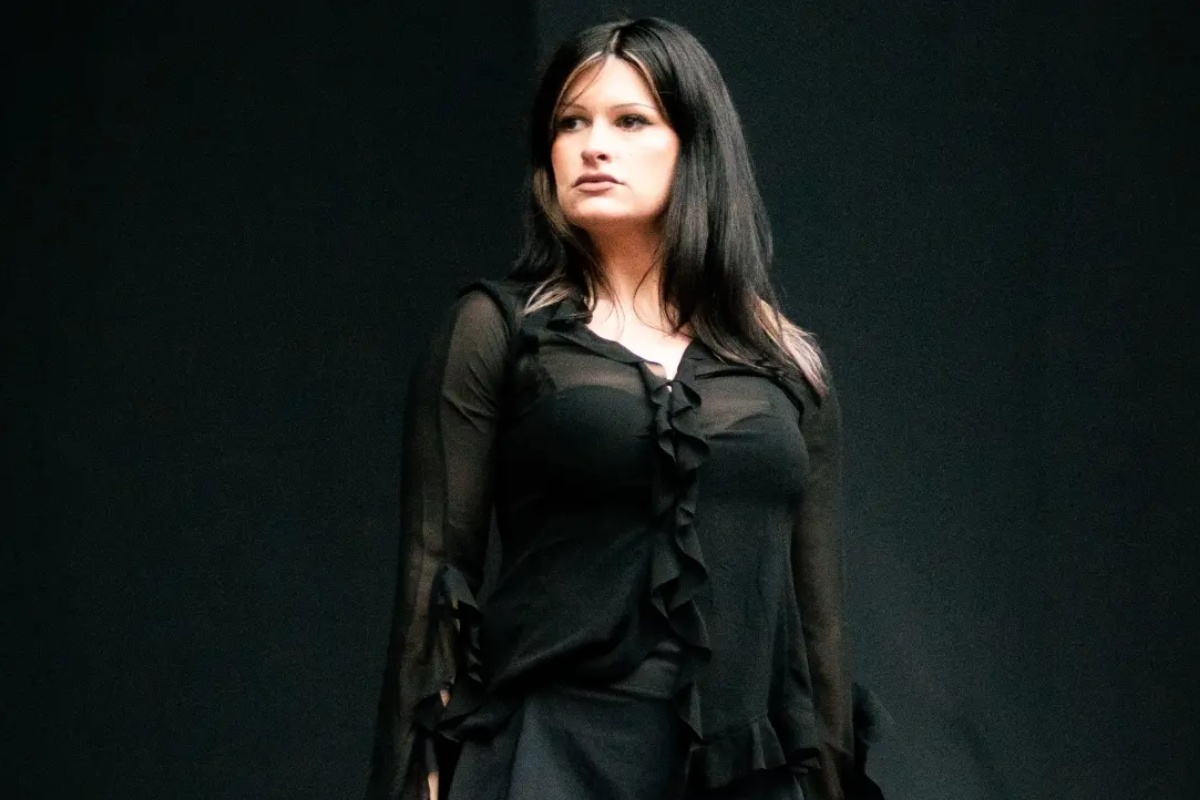
Spiritbox frontwoman Courtney LaPlante recently shared her bold take on the future of heavy music in an interview published on Spin Magazine. She explained why she believes metal is at a saturation point and on the verge of a major cultural shift.

LaPlante reflected on how the identity of rock and metal artists has evolved over the decades. She also spoke about why today’s generation of musicians connects with audiences in a fundamentally different way than their predecessors.
“The ’80s and ’90s acts were the cool guys. Or at least they put on the armor of being a cool guy. Me and my peers, I don’t think any of us have an aspirational fantasy or a chauvinistic thing we’re selling. We’re just selling that we’re depressed and anxious,” she said. “We went from being nerds to being nerds with marketability, so people found out about us.”
She then turned her attention to where the genre currently stands in terms of production and audience expectations, arguing that the scene has reached its ceiling.
“We don’t have the coolness and excessiveness of real rock stars back then. But we’re at max capacity for how production sounds and what people want to hear in their music,” LaPlante continued. “They want to hear authenticity. They want to hear real performances, real drums, and real unedited guitar. The circle is completing right now. We’re waiting for the next Nirvana, and we want to be adaptable and embrace that.”
The comments come as Spiritbox continues to grow as one of the most prominent voices in modern heavy music. LaPlante is positioning the band as ready to evolve alongside whatever seismic shift may be on the horizon.
LaPlante’s remarks carry weight given where Spiritbox currently stands in the metal landscape. The band has steadily built a reputation as one of the genre’s most forward-thinking acts. Their trajectory offers a useful lens through which to understand her broader claims about the state of heavy music.
Kerrang! reported that Spiritbox broke through to mainstream metal audiences with their 2021 single “Holy Roller,” which became one of the most-streamed heavy songs of that year. The track helped establish LaPlante as one of the genre’s most distinctive voices. Its viral success demonstrated that modern metal audiences are drawn to raw emotional intensity over polished excess — a point that aligns directly with LaPlante’s argument about authenticity driving the next wave of heavy music.
The band’s rise also coincided with a broader shift in how metal is consumed. Billboard noted that metal and hard rock streaming numbers have grown consistently over the past several years. Younger listeners have been gravitating toward acts that blend genre boundaries and prioritize genuine emotional expression over technical spectacle. This trend supports LaPlante’s view that the audience is primed for something disruptive.
The Nirvana comparison is not made lightly in rock circles. Nirvana’s 1991 album Nevermind is widely credited with dismantling the dominance of glam metal almost overnight. It proved that a single culturally resonant moment can redraw the entire map of popular music. Rolling Stone highlighted that the album’s success was less about technical innovation and more about an authenticity that felt radical in contrast to the era’s prevailing excess — the very dynamic LaPlante is now describing in reverse, with metal itself becoming the established order waiting to be upended.
Whether Spiritbox will be the band to trigger that shift remains to be seen. LaPlante’s willingness to name the moment — and to openly position her band as ready to adapt to it — signals a self-awareness that is rare at the top of any genre.


