
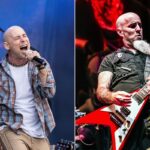


Twisted Sister’s Dee Snider opened up about the fate of his post-Twisted Sister hard rock project, Desperado. The singer addressed the shelved master recordings of the band’s 2006 album Ace and explained why fans will likely never hear the songs in their intended form.

Snider reflected on the years of effort he poured into Desperado. He formed the band in 1988 following Twisted Sister’s disbandment, and the project was dealt a lasting blow when Elektra Records shelved it for over three decades.
“The really sad thing is that Desperado is some of the best work I ever did. Singing, songwriting. I dedicated 3 years and a fortune to that project,” Snider said. “Elektra records shelved it for more than three decades. It’s available on some Indie labels now but the moment has passed (and two of my band members are gone. RIP Bernie Torme and Clive Burr).”
Snider went on to clarify the complicated rights situation surrounding the recordings. While the album has been licensed to independent labels, he has no control over the masters.
“For those of you playing along at home it has been licensed by two indie labels. Angelfire is one. I don’t control the masters. I own the copyrights. I don’t own the master recordings…but I’m not recording it again,” he continued. “Two of my band are dead. It’s over.”
When asked about the whereabouts of the original master recordings, Snider admitted he has no answers — and has had to make peace with the loss.
“No idea where they (the master recordings) are. I know that some labels have cleaned out their warehouses and literally thrown old masters away,” he said. “I love the interest and enthusiasm, but at this point it’s ‘back to the future’ for me. I suffered for years over the loss of that album. I had to let it go.”
The only versions currently accessible to fans are those available through indie label licenses and bootlegged recordings.
The weight behind Snider’s words becomes clearer when the full story of Desperado is taken into account. The band was not a casual side project. It was a deliberate, ambitious effort built around a lineup that carried serious rock and metal credentials, and its collapse left behind one of the most celebrated lost albums in hard rock history.
Desperado was assembled as something of a mini-supergroup. Snider recruited Irish guitarist Bernie Tormé, who had built his reputation through work with Ian Gillan’s band. Tormé also completed a high-profile stint filling in for the late Randy Rhoads in Ozzy Osbourne’s band. Rounding out the lineup was former Iron Maiden drummer Clive Burr and bassist Marc Russell. Together, the four spent years writing and recording, reportedly producing over 100 songs before the sessions that would become Ace.
The album was recorded in 1990 and is widely regarded as one of the high points of that era’s hard rock and metal output. It was shelved when Elektra’s internal priorities shifted. The A&R champion who had signed the project departed the label, and with grunge rapidly reshaping the commercial landscape, the record was scrapped rather than transferred to another imprint. It would remain unreleased for well over a decade.
Ace eventually surfaced through independent channels. It was released under its original title by Cleopatra Records in the United States and Angel Air in Europe. By then, the moment had long passed. The album arrived without the promotional machinery or cultural context that could have made it a landmark release, and the band itself no longer existed in any meaningful form.
The losses Snider references are not abstract. Bernie Tormé died on March 17, 2019 — one day before his 67th birthday — after a period of serious illness. Clive Burr, who had battled multiple sclerosis for years following his time with Iron Maiden, passed away in 2013. Their deaths closed the door permanently on any possibility of revisiting the material. Snider has been unequivocal that no reunion or re-recording will ever take place. What remains is the music itself — imperfect in its availability, but preserved as a testament to what the band briefly was.
Source: Dee Snider on X (Twitter)


