




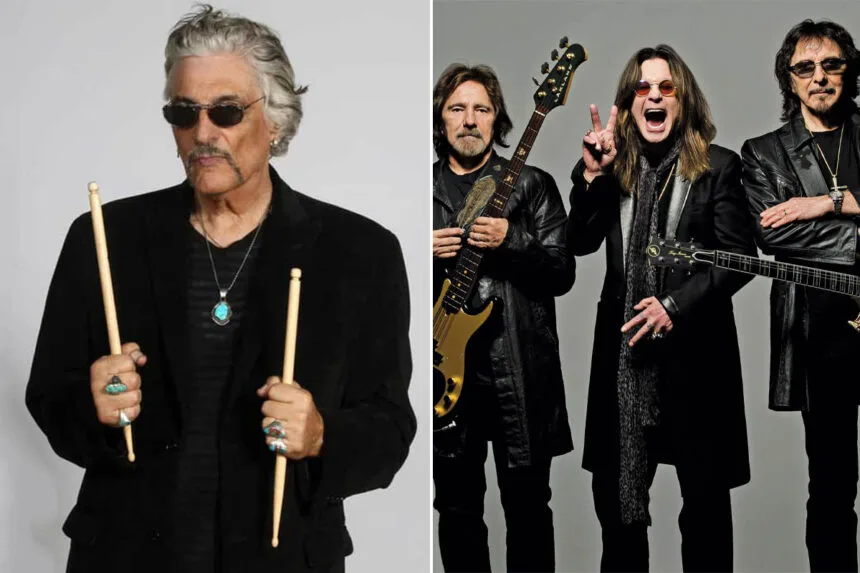
Legendary drummer Carmine Appice recently shared his thoughts on the origins of heavy metal. He argued that Black Sabbath should not be considered the fathers of the genre and pointed to Metallica as the true embodiment of heavy metal.

Appice placed Black Sabbath, Cactus, and Led Zeppelin firmly in the hard rock category rather than heavy metal. He drew a clear line between the two genres based on specific musical characteristics.
“Sabbath was not a heavy metal band,” Appice said. “Sabbath was a rock hard rock band just like Cactus. We play gigs with them. They weren’t heavy. They weren’t heavy.”
“It was hard rock. It’s like Led Zeppelin. They were as heavy as Led Zeppelin, you know. I don’t know. It was all hard rock. It was all hard rock. I don’t know where this label heavy metal came in.”
Appice went on to name Metallica as the defining force behind true heavy metal, citing the band’s guitar tone and drumming approach as the key markers that separated the genre from hard rock.
“You look at everybody. You look at Motley Crue, they weren’t heavy metal,” he continued. “You know what heavy metal was? Metallica. And the guitar sounds turned into that real heavy grungy kind of — what do you call it? I don’t know. The crunch. The crunchy kind of good way of saying where the bass drums followed the guitar. That’s the heavy metal.”
“They were all heavier. The guitars were just heavier. But it was all the same — that quarter notes on the bass drum, you know. The bass drum followed the bass. But when you change to that guitar grungy, what do you call chainsaw kind of sound and the bass drums are following the guitar, it’s a whole different deal, you know? It’s a whole different vibe.”
Appice also recalled sharing the stage with Black Sabbath. He noted that both bands had a similarly powerful sound at the time, before Sabbath’s style evolved into what many began labeling as heavy metal.
“When we played with Black Sabbath, they had six Marshals. So did we,” he said. “We sounded just as heavy as they did. But later on, they started calling Sabbath heavy metal. So they got like more d-tuned the guitars — but it was still hard rock, heavy hard rock, you know. It’s my own opinion. Maybe I’m crazy.”
These comments are not the first time Appice has made this argument. He has doubled down on his position in multiple interviews, making it clear that his view on the genre’s origins is a firmly held conviction rather than an offhand remark.
Appice has been consistent and direct in his stance. “I consider heavy metal starting with Metallica. Before all that, it was hard rock. The crunchy guitars, the buzztone guitar and the double bass drum following the guitar riff — that’s what gave birth to heavy metal.” He has extended this classification to exclude not only Black Sabbath but also bands like Motley Crue, Van Halen, and Blue Murder, all of which he places firmly in the hard rock category.
The distinction Appice draws is rooted in sound and technique. The defining markers of true heavy metal, in his view, are the razor-edged, chainsaw-like guitar tone and the double bass drum pattern that locks in with the guitar riff rather than the bass guitar. He identifies this shift as beginning with Metallica in the 1980s. Everything that came before, regardless of how loud or aggressive it sounded, falls under the umbrella of heavy hard rock in his view.
Appice’s position directly challenges one of rock music’s most widely accepted narratives. Black Sabbath has long been credited by fans, critics, and music historians as the founding force of heavy metal. The band’s dark riffs, down-tuned guitars, and ominous atmosphere are widely seen as the blueprint for the genre. Appice does not dispute the band’s influence or power, but insists that influence alone does not determine genre classification.
The debate over heavy metal’s true origins has never been fully settled within the music community. Appice’s repeated insistence on Metallica as the genre’s starting point has reignited that conversation. His perspective carries weight given his decades of experience playing alongside many of the bands in question. His commentary is more than just opinion — it is the testimony of someone who was present at the formation of hard rock and witnessed firsthand how the genre lines were drawn, or in many cases, never drawn at all.