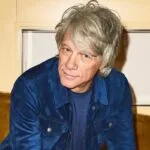

Former KISS guitarist Bruce Kulick recently opened up about the band’s approach to their MTV Unplugged setlist. He shared his thoughts in an interview on Shout It Out Loudcast.

Kulick reflected on how the intimate atmosphere of KISS conventions influenced the band’s willingness to dig deeper into their catalog for the Unplugged performance. This stood in contrast to Paul Stanley’s usual stance on sticking to crowd favorites during large-scale tours.
“I have a theory about the setlist and the fact that Paul [Stanley]’s rule of, ‘No, they wanted to hear ‘Love Gun’ and ‘Detroit Rock City’ and ‘Rock and Roll All Nite,'” Kulick said. “And I get why he says that when he’s out doing these major, major huge tours, which you’re really not up close with the fans at all. It becomes like this, ‘mass love thing.’ And then as a production, y’know, with the $1,000,000 worth of lasers, lights, and platforms and things.”
Kulick then explained how the KISS conventions created a more organic, fan-driven environment that shifted the band’s perspective on performing rare material.
“We just came off of very awesome experience I think that really got them seeing things a little different, and accomplished exactly what Gene [Simmons] thought it could do,” he continued. “Y’know, ‘Let’s get up close and personal. We should be the stars of a Kiss Expo.’ And then that casual people throwing out songs. Like, who knew someone would say ‘Love Theme from Kiss’?”
“So I just think that the setlist approach for Unplugged was born out of what happened organically at the conventions,” Kulick said. “And that doesn’t happen in concerts when you are just a mega star, and it’s sold out every night, and you’re taking 12 trucks on the road. It’s just not the same.”
He was careful to clarify that his comments were not meant as a criticism of Stanley’s decisions at larger venues. Rather, he was attempting to explain the mindset behind the Unplugged experience.
“Now, I’m not trying to defend Paul not doing deeper tracks at those venues. But I’m just saying the mindset I’m trying to put us into, ‘Well, would we do an ‘Elder’ song?’ ‘Cool!’ Now acoustically, now we’re in a different environment. Now you have pretty lights, candles, you’re all sitting,” he said. “So, [sings beginning lyric of ‘A World Without Heroes’], it’s perfect. Some of those songs, I was familiar with them, but I didn’t realize how amazing they were and how well we could interpret them.”
Kulick’s remarks shed light on how the stripped-down, intimate setting of MTV Unplugged gave KISS the freedom to revisit rarely performed tracks from their extensive catalog.
The MTV Unplugged performance was recorded on August 9, 1995, at Sony Studios in New York. It became one of the most historically significant nights in the band’s career. It marked the first time since 1979 that the original KISS lineup, featuring Ace Frehley and Peter Criss, had performed together on stage. The event was a landmark reunion that would ultimately pave the way for the band’s full-scale original lineup comeback the following year.
The setlist that night reflected exactly the kind of deep-catalog exploration Kulick described. Songs like “Rock Bottom,” “See You Tonight,” “I Still Love You,” and “Every Time I Look At You” — tracks that had been absent from KISS setlists for years — were given new life in the acoustic setting. Ace Frehley performed a solo rendition of “2,000 Man.” Peter Criss delivered a rare live performance of “Beth.” Both moments underscored just how different the evening was from a standard KISS arena show.
The groundwork for that openness was laid during the 1995 Konvention Tour, which preceded the Unplugged taping. The tour was deliberately designed as a fan-centric experience, featuring acoustic sets, meet-and-greets, and Q&A sessions that put the band in direct, close-quarters contact with their most devoted followers. It was a format that stood in sharp contrast to the massive, production-heavy spectacles KISS had built their reputation on. It clearly had a lasting effect on how the band approached the Unplugged session.
Kulick served as the band’s lead guitarist for 14 years, from 1983 to 1996. He joined during the Lick It Up era and contributed to albums through Carnival of Souls: The Final Sessions. His tenure made him the second-longest-serving lead guitarist in the band’s history. His deep familiarity with the catalog gave him a unique vantage point on which songs could translate powerfully in an acoustic environment — and which ones had been unfairly left behind.
The MTV Unplugged performance ultimately served as a turning point for KISS. The reunion of the original four members on that stage in New York set in motion the events that led to the full Alive/Worldwide Tour reunion in 1996 and 1997. What began as an organic, fan-driven experiment at convention-style events ended up reshaping the final chapter of one of rock’s most iconic bands.