

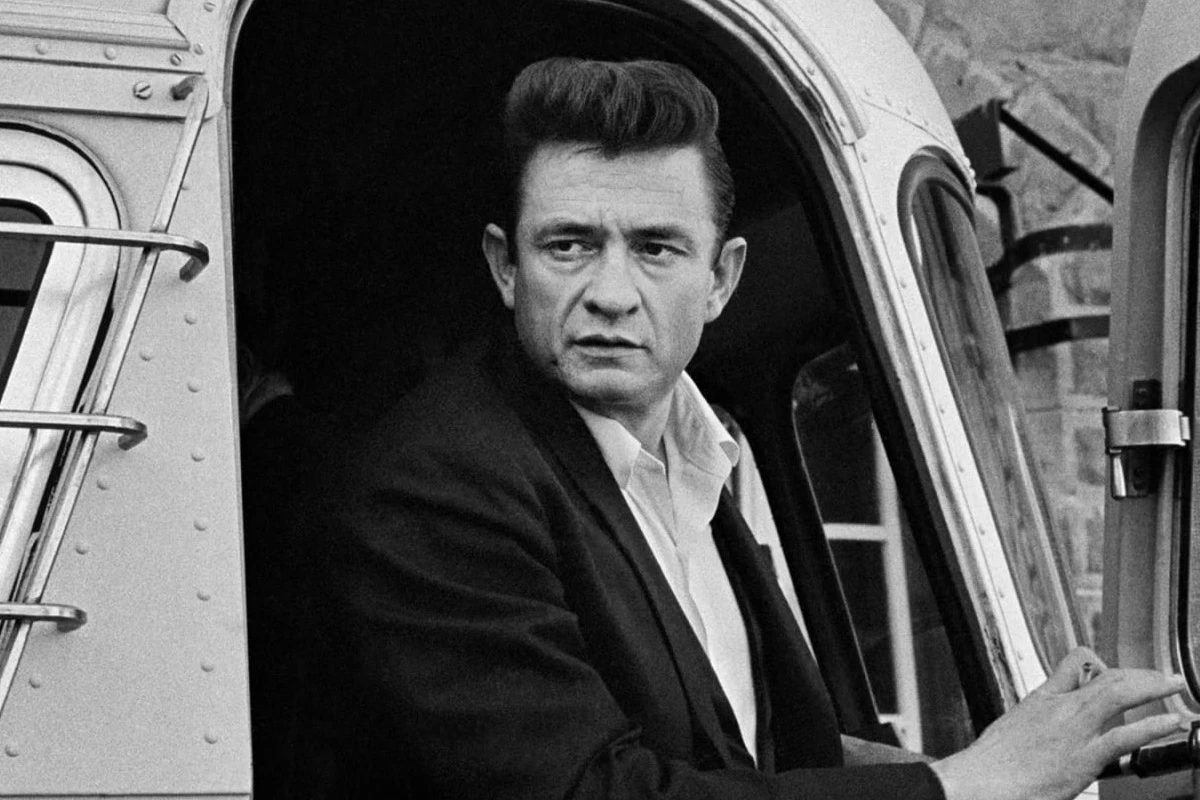
With his deep, resonant voice and raw, emotional lyrics, Johnny Cash has had an immeasurable impact on music. He connected with his audience on a personal level and sang about the struggles and hardships of everyday life, touching on themes like love, loss, and redemption. As such an influential artist, Cash had many defining moments during his career, including his iconic prison concerts.

The legendary singer first performed at a prison in 1957, at the Huntsville State Prison in Texas. The performance was so successful that Cash continued to perform at prisons throughout his career, including at Folsom State Prison in California in 1968 and at the Tennessee State Penitentiary in Nashville in 1976.
One of his memorable prison concerts was his performance at San Quentin State Prison on February 24, 1969. It was recorded live and released as an album titled ‘Johnny Cash at San Quentin.’ Yet, there happened some unexpected moments at that concert that tempted Cash to start a prison riot.
Before his appearance in San Quentin, Cash had planned to perform his regular setlist. However, the Granada TV representatives who would film the concert asked him to write a song for the event. He initially didn’t like the idea but eventually began to consider the importance of the prison concert. In the next two days, Cash tried to empathize with his audience and understand their perspective.
Knowing the reputation of San Quentin, which housed the state’s only death row men, the singer started to imagine the men’s anger and the hostile environment that awaited him. Before the concert, Cash had written two songs, one inspired by his own arrest for public intoxication in Starkville, Mississippi, in 1965, and the other a reflection on repressed anger. The late musician had a rough idea of the setlist and planned to play the new songs toward the end of the show.
He greeted the 1400 convicts and began with some of his classic songs. In the end, he presented his two new songs, ‘Starkville City Jail,’ which mocked an aggressive police force, and ‘San Quentin,’ which was his most powerful song of the night. When he opened ‘San Quentin’ with the lyrics, ‘San Quentin, you’ve been livin’ hell to me,’ the crowd responded with a chilling soar of solidarity.
The tension in the room increased with each passing line of the song, which lasted almost four minutes. He could feel the crowd’s desire for more, and he played the song again. Later, in his biography, ‘Johnny Cash: The Life,’ Robert Hilburn wrote about the producer Bob Johnston’s words about the moment. Johnston told him that the guards were uneasy, anticipating a riot. Cash felt a sense of immense power as the prisoners stood on the tables and cheered. The producer also claimed that he could have incited a full-scale riot, as Cash also admitted that he was tempted to do so.
Here is how Johnston recalled the moment:
“All the guards were nervous. They thought there was going to be a riot. He realized that all he had to say was, ‘Let’s go!’ and there would have been a full-scale riot. He told me after, ‘I was tempted.'”
Thus, upon seeing the inmate’s reaction to his song, Johnny Cash felt a temptation to start a prison right for a second. However, he kept on singing ‘Wanted Man’ to lighten the mood. Things calmed down at last, but Cash didn’t deny that he thought about initiating a riot.