
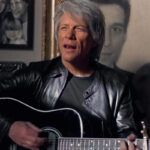
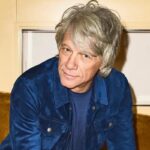


John Corabi recently opened up about his experience recording with Mötley Crüe. He shared candid insights about the band’s only album together in an interview with Metal Mayhem ROC.

The former Mötley Crüe vocalist reflected on the creative process and commercial reception of their 1994 self-titled album. He offered his perspective on what many consider a controversial period in the band’s history.
“Regardless of what anybody thinks or says or whatever, we had so much fun writing and recording and experimenting and doing that first record,” Corabi said. “It was a lifetime experience, you know what I mean? Regardless of how the record sold when it came out, I’m pretty sure like, you know, it wouldn’t have mattered who was in the band.”
Corabi acknowledged the challenging music industry climate of the early 1990s. Grunge and alternative rock were displacing hair metal bands during this period.
“If you go back and remember like bands like Bon Jovi, Def Leppard, Poison, Mötley, all those bands were struggling at that point because this, you know, new era of music was coming in and nobody gave a f*ck anymore,” he continued. “But the actual recording process, I just remember sitting in the studio with Tommy while we had a 53piece orchestra doing the orchestra parts for Misunderstood. And we were just laughing and crying. We were so emotional over how awesome this stuff sounded.”
The vocalist addressed criticism that the album didn’t sound like traditional Mötley Crüe material. He suggested this was intentional.
“I think the fans are correct. It didn’t sound like a Mötley record. But I think to some degree that’s what those guys wanted,” Corabi explained. “If you look at the album cover, it was a very plain album cover. And I just remember being in the studio and I remember them saying mainly those three, you know what, it’s always about it’s always been about image with us. This is our statement record. You know what? We can play. We can write songs and we can play.”
Corabi disputed the portrayal in the band’s biographical film “The Dirt” regarding the subsequent tour.
“And even when we did go on tour, contrary to how the movie, The Dirt, portrayed our tour, it was bad, but it wasn’t as bad as the movie made it sound,” he said. “I mean, we were we were still going out to Darian Lake and places like this and yeah, we were playing huge places that, you know, maybe held 10,000 and for the first time in their career, they weren’t selling sh*t out, but we were still doing three, four, five, 6,000.”
Corabi concluded by putting the album’s reception in broader context: “So to some degree it was a failure. But at the time, in hindsight, now we can go back and look at it and go, it wasn’t as bad as everybody thought because everybody from our genre of music was kind of struggling.”
Corabi’s positive memories of the recording process contrast with the album’s commercial performance. This reflects the broader challenges facing rock music in the mid-1990s.
Wikipedia documented that the self-titled album was released on March 15, 1994. It marked the band’s first new material since 1989’s Dr. Feelgood. The album debuted at No. 7 on the Billboard 200 and achieved gold status in both the US (500,000 units) and Japan (100,000 units). However, its chart performance quickly declined amid the changing musical landscape.
The album found greater success in certain international markets. Noise11 reported that the album peaked at No. 3 in Australia. This made it the band’s highest chart position in that country and outperformed Dr. Feelgood’s No. 7 peak. This success made Corabi technically Australia’s highest-charting Mötley Crüe singer.
The touring challenges Corabi mentioned were indeed significant. Ultimate Classic Rock noted that the supporting tour found the group downsizing from their usual arena shows to clubs and theaters. This represented a dramatic shift for a band that had routinely packed 20,000-seat venues during their heyday.
The album’s commercial struggles reflected broader industry trends. Traditional heavy metal and hair metal bands faced declining sales during the grunge era. However, the record has gained critical reevaluation over the years. Many fans and critics now view it as an underrated entry in the band’s catalog that showcased their musical versatility beyond their party-rock image.