



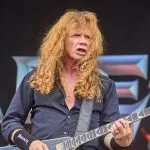



Skillet frontman John Cooper recently addressed accusations labeling the band’s Christmas song as “demonic.” He shared his response in an interview with Leah Klett.

The controversy centers around listeners’ conflicting interpretations of the song. Some call it demonic while others view it as a powerful artistic expression of Jesus’s coming.
Cooper provided a candid response about his initial reaction and current perspective when asked about how he responds to these accusations of demonic activity in the song.
“When I first when I first heard of it, it was actually from a friend of mine um who is a a Christian theologian, you know, apologist, and he sent me a text and he was like, ‘These people are crazy,’ but I honestly thought it was a joke,” Cooper said. “And I was like, ‘Oh, that’s funny.’ I don’t get the joke.”
Cooper went on to express skepticism about the scope of the criticism. He also shared his overall attitude toward the controversy.
“It was just really weird. I’m not convinced it’s even a whole lot of people. No, I think might might be one of those weird online when it makes it seem like there’s a whole lot of people, but in the end it’s just it’s a loud group, I guess,” he continued. “I don’t even know. I don’t even really care. I mean, it just doesn’t matter to me.”
Cooper’s response suggests he views the accusations as coming from a vocal minority rather than widespread criticism.
The controversy surrounding Skillet’s rendition has sparked broader discussions about modern interpretations of traditional Christian music. It has also raised questions about the role of rock elements in worship songs.
The song at the center of the debate is “O Come, O Come Emmanuel,” a rock rendition of the 1851 hymn. Cross Rhythms reported that the lyrics are a metrical paraphrase of the “O Antiphons,” a series of plainchants with English translation by John M Neale in 1851. The hymn itself has deep historical roots. It is based on ancient liturgical chants that date back centuries in Christian tradition.
Cooper has defended the artistic choices behind the song. He explained the band’s intent to honor the original while making it accessible to modern audiences. He emphasized that the song captures “the mood of the original song.” Cooper described it as “a very special song – a very, very ancient song” that serves as an Advent song celebrating both Christ’s first coming and anticipating His second coming.
Despite the criticism from some quarters, the song has found significant support among listeners. The video has garnered over one million YouTube views. This indicates substantial interest and engagement from the public. Many viewers have praised Skillet’s interpretation as a powerful and cinematic take on the beloved hymn.
The band’s approach reflects a broader trend in contemporary Christian music. Traditional hymns are being reimagined with modern rock and metal elements. This style has both supporters who appreciate the fresh interpretations and critics who prefer more traditional arrangements of sacred music.


