




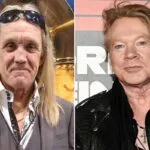


Former KISS guitarist Bruce Kulick recently addressed how the band’s members outside of Gene Simmons and Paul Stanley are financially connected to Pophouse Entertainment’s deal for the KISS brand. He spoke about it in an interview shared on YouTube.

Kulick was asked to clarify whether he and other former or extended KISS members, such as Eric Singer, Vinnie Vincent, Ace Frehley’s estate, or Peter Criss, have any formal arrangement with Pophouse covering likeness rights, merchandise, or events like KISS’s Las Vegas residency.
The interviewer’s question was as follows: “Pophouse has agreements obviously with Gene and Paul, but in order to do things, they need to have sort of agreements with the rest of the members for likeness and things like that. Do you have a relationship with them? Are you like on a retainer with them? Like certain things like, ‘Hey Bruce, we’re doing this Vegas event. You’re part of the family. You’ll get this much.’ Or, ‘Hey, Bruce, we’re releasing this, so you’re on this. You’re part of our group. You’ll be compensated this way.’ Are people like yourself, Eric, even Vinnie or you know, Ace’s estate or Peter, like is there a thing where Pophouse has something with you guys in order so that there’s no messiness about releasing future items, merch, or events like Kiss Vegas.”
In response, Kulick walked through how compensation works depending on what is being released. “I mean, it might be hard for the average fan to totally grasp this, but I’ll try to keep it as simple as possible,” Bruce Kulick said. “Any record I did and anything that appears on a record or anything. Universal loans that was part of like that was my job and I was paid. I wrote a song there’s some money but that’s through a different way.”
He then explained the distinction when it comes to merchandise using his likeness. “Likeness-wise for example putting me on merchandise since they bought Kiss from Gene and Paul, I don’t think they need their permission,” he continued. “But they would need, you know, some contact with me in agreement with me or Eric Carr’s estate. And if they were using Vinnie, I guess they’d have to reach out to Vinnie.”
Kulick went on to describe how existing recorded material is treated differently than new releases. “Anything on a record, okay, belongs to the record company,” he said. “It can be marketed and put out without permission from any of the people that are part of that because it already existed. It’s there. And that’s why sometimes the marketing is only going to include, you know, variables of the actual pieces of the record. If they were going to do other things possibly… they don’t need, you know, my permission to show rehearsal footage or things like that. It was all chronicled and everything and they’re not selling it. They’re just showing it to everybody.”
He was less certain about how selling archival material would work. However, he was clear about his own status regarding the Pophouse agreement. “What would happen if they wanted to sell that stuff, I’m not really familiar, but I do know on merchandise they would have to reach out because I wasn’t part — and here’s the important part — I wasn’t part of the Pophouse deal,” Kulick said. “Neither was Peter or Ace, of course. Regarding how Eric and Tommy are related to that, very confusing and I don’t know.”
Kulick added that future projects, such as an anticipated release tied to the album “Crazy Nights,” would likely involve direct negotiation. “But here we are where Pophouse can put out all the records with Universal and do it, you know, however they like,” he said. “If they’d like to, let’s say for Crazy Nights, that should be coming up next year. If they want to do a cool Crazy Nights image, they’ll speak to me, my manager, and I’m sure we can come to an agreement about a cool looking t-shirt and no one’s going to get hurt. Do you know what I mean?”
He also pointed to how archival footage of Ace Frehley and Peter Criss has been used without needing direct clearance from them. “But I think it’s another reason why you notice the images of Ace and Peter on the disc,” Kulick said. “They’re from the performance. They’re from the record or from the inner thing. You know, they didn’t have to go to Ace’s estate, whoever that is now, or Peter, and say like, ‘We want to use this.’ You know what I mean? And in fact, I saw Peter supported the record. He tweeted it on his Twitter or something. You know, he reshared what Kiss did. This is something he’s proud of. He should be proud of it. I’m happy about that because I know, you know, he may not jump into a lot of the other Kiss albums, but this one was kind of special.”
Kulick concluded by noting that any further collaboration ultimately depends on Pophouse’s willingness to engage. “But I still think it could all be, you know, figured out,” he said. “It all depends on their desire, how much they want to, you know, share and do.”
Kulick’s breakdown offers a rare glimpse into the layered structure behind the Pophouse deal. Understanding the scale and design of that agreement helps put his comments into perspective.
Pophouse’s acquisition of KISS closed in 2024. The Stockholm-based company took ownership of the band’s music catalog, brand name, likeness, and trademarks. The transaction was worth more than $300 million, making it one of the largest catalog and IP deals in rock music history. That price tag reflects why the deal was structured directly with Gene Simmons and Paul Stanley. Separate arrangements were left to be worked out with other members and estates on a case-by-case basis — exactly the kind of “messiness” the interviewer’s question was probing.
Pophouse is no stranger to this kind of large-scale artist partnership. The company was co-founded by ABBA’s Björn Ulvaeus. It built its reputation with the “ABBA Voyage” digital avatar concert experience before expanding its catalog holdings to include Avicii, Tina Turner, Iron Maiden, Swedish House Mafia, and Cyndi Lauper. KISS now sits alongside those acts as one of Pophouse’s marquee acquisitions.
The company’s ambitions have only grown since the KISS deal was finalized. In 2025, Pophouse closed a $1.3 billion fund dedicated to further catalog and IP acquisitions. Roughly 30 percent of that fund has already been deployed across artists including KISS, Cyndi Lauper, and others. That level of capital underscores why Pophouse can afford to negotiate individually with figures like Kulick for future merchandise and branding opportunities rather than folding every member into a single blanket agreement.
Gene Simmons has publicly described the arrangement as a “collaboration” rather than a simple sale. That framing aligns with Kulick’s account of ongoing, deal-by-deal discussions for things like potential Crazy Nights merchandise. That structure appears to leave room for members like Kulick, Eric Singer, and the estates of Ace Frehley and Eric Carr to negotiate their own terms as new projects arise. None of them, however, were formally part of the original Pophouse transaction.


