


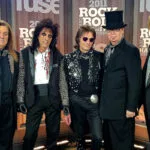




Journey’s Jonathan Cain has opened up about the Christian faith connection behind the band’s iconic song “Don’t Stop Believin’.” He shared details that many fans had never heard before.

“Only the hand of the Lord could take an accordion player from Chicago and put him in Steve Perry’s living room to write ‘Don’t Stop Believin,'” Cain said. “When we say, ‘Hold on to that feeling,’ that might just be the Holy Spirit.”
He also traced the song’s title back to words of encouragement from his father during a difficult time in his life.
“He said, ‘Don’t stop believing. God has a vision for you,'” Cain recalled.
Cain went on to address those who push back against expressions of strong religious belief, framing it as a broader cultural issue.
“You’re always going to get people who hate God and hate the Bible,” he said. “Look what happened to Jesus. I think people are scared by strong belief because so many people don’t believe anything. Without God, you’re just existing.”
He also touched on the intersection of faith and public policy, emphasizing why he believes Christians should remain engaged.
“It’s not politics to me; it’s policy,” Cain continued. “As Christians, we need to care about policy because it affects our children, our families and our future.”
The remarks came as part of a broader conversation about Cain’s new song Winds of Freedom, inspired by America’s 250th anniversary.
The song at the center of Cain’s revelations has a legacy that few tracks in rock history can match. It makes his claims about its spiritual origins all the more striking.
“Don’t Stop Believin'” was released in October 1981 as the second single from Journey’s seventh studio album, Escape. It was co-written by Cain alongside bandmates Steve Perry and Neal Schon. The album gave the band their only No. 1 on the charts.
The song initially reached number nine on the Billboard Hot 100. Its true cultural footprint only grew in the decades that followed. It has since become the most popular pre-digital song of all time in America. That distinction was cemented in 2024 when the RIAA certified it 18x platinum.
That level of endurance is rare even by classic rock standards. The track has re-entered charts multiple times across different eras, driven by television placements, streaming growth, and a fanbase that has expanded well beyond its original audience. As recently as May 2026, the song re-entered Billboard’s Rock Streaming Songs chart, more than 45 years after its original release.
Cain’s decision to speak openly about the song’s faith-based roots adds a new dimension to a track long interpreted as a universal anthem of hope and perseverance. For Cain, the message was never purely secular. It was personal, spiritual, and tied directly to a moment of crisis that his father’s words helped him survive.


