
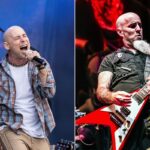

Ratt singer Stephen Pearcy recently shared his views on musicians mixing politics and religion with music. He addressed the topic in an interview on On The Road To Rock With Clint Switzer.

Pearcy’s comments came in response to artists like Poison frontman Bret Michaels recently backing out of the ill-fated “Freedom 250” concert series on the National Lawn in Washington. He explained why he believes musicians should keep their personal opinions on politics and religion separate from their music.
“Well, my opinion is I don’t mix politics or religion with music. Never have, day one, nor do I think anybody else should. Everybody’s entitled to their opinion, but the minute you start taking sides, you’re gonna start making enemies. And that’s just the way it is,” Pearcy said.
The singer went on to elaborate on the consequences of taking a public stance. He invoked the legacy of rock icon Frank Zappa to reinforce his point.
“So if you commit to something, you better believe in it or you’re gonna be dealt with the consequence, and that’s mixing politics and religion with music. And I think Frank Zappa, our godfather of music, said it straight, you know? Don’t do it. [Laughs] And me, I’m a firm believer. We never believed in it, taking sides for anything. All for one,” he continued.
Pearcy’s remarks reflect a longstanding personal philosophy he says has guided Ratt throughout their career.
Pearcy’s stance places him in a long tradition of rock musicians who have wrestled with the question of whether the stage is an appropriate platform for political expression. That debate has only grown louder in recent years as artists across genres have increasingly used their platforms to weigh in on social and political issues.
The “Freedom 250” concert series was set to take place on the National Lawn in Washington. It became a flashpoint in that debate after several high-profile artists, including Bret Michaels, withdrew from the event. Ultimate Classic Rock reported that the concert was widely seen as politically charged, putting artists in the uncomfortable position of either participating and risking alienating fans or pulling out and facing criticism from a different direction. Michaels, who has long cultivated a broad, apolitical fanbase with Poison’s anthemic rock, ultimately chose to step away from the event.
The tension between artistic expression and political alignment is nothing new in rock history. Frank Zappa — whom Pearcy cited as a guiding voice on the matter — was himself a complex figure in this regard. Rolling Stone noted that Zappa famously testified before Congress in 1985 against music censorship. He was equally vocal about his disdain for artists who he felt used political posturing as a marketing tool rather than a genuine expression of belief, arguing that authenticity was the only currency that mattered.
Ratt, the band Pearcy fronted to massive commercial success in the 1980s, built their reputation on straightforward hard rock and glam metal that steered clear of political messaging. AllMusic noted that the band’s catalog — anchored by hits like “Round and Round” and “Lay It Down” — was defined by themes of rebellion, romance, and excess rather than social commentary. That formula helped them sell millions of records and remain a beloved name in classic rock circles decades later.
Bret Michaels has similarly spent much of his career cultivating an image rooted in rock and roll escapism rather than political engagement. His decision to withdraw from the “Freedom 250” event appears consistent with a desire to keep his music and his fanbase free from political division. That move ironically aligns closely with the very philosophy Pearcy is now articulating. Whether Michaels sees it that way, however, remains to be seen.


