





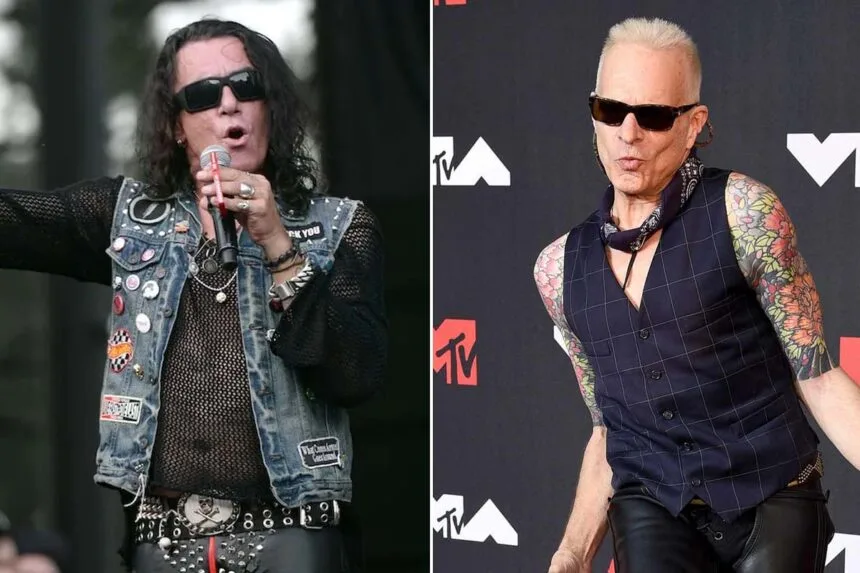
Ratt frontman Stephen Pearcy recently reflected on the lasting influence of Van Halen singer David Lee Roth as a frontman and vocalist, discussing the topic in an appearance on The Mighty VH Podcast.

Pearcy addressed how Roth’s persona shaped the way a generation of frontmen approached their craft. He traced some of that influence back further than many realize.
“Well, when you find out years and years later Jim ‘Dandy’ [Mangrum, lead singer for the 1970s rock group Black Oak Arkansas] had a lot to do with it, [Roth’s] image and his stuff,” Pearcy said. “But us singer guys, I totally went, ‘I have to be the lead singer in my [pre-Ratt] band Mickey Ratt.’ And that was around when Jake E. was in the band. But he had his own cool thing too.”
Pearcy went on to describe just how widespread Roth’s impact was among performers on the Sunset Strip during that era.
“What Dave did for everybody, all the lead singers on the Strip, or most of them, especially if you had blonde hair or something, trying to emulate Dave — I mean, he had the image, he had the rap, he had the voice — and a lot of us out there that were seeing this were going, ‘Holy shit,’ to all of it,” Pearcy continued. “You had to just up your game. They set the bar for what was to happen in the ’80s.”
Pearcy’s comments underscore Roth’s role as a defining influence on the rock frontmen who followed in his wake throughout the decade. The roots of that influence stretch back further than the Sunset Strip scene itself.
Jim “Dandy” Mangrum was already commanding stages with the same kind of flamboyant swagger long before Roth became the platinum-blonde showman of Van Halen. Mangrum fronted Black Oak Arkansas throughout the early-to-mid 1970s, striking poses and cultivating a stage persona that would later echo unmistakably in Roth’s own act. The comparison isn’t lost on those who watched both frontmen come up.
Roth himself has never shied away from acknowledging Van Halen’s outsized footprint on the decade that followed. He’s pointed directly to the band’s look as the template that countless glam and hair metal acts borrowed from wholesale. He has argued that the spandex-and-headband aesthetic so many groups adopted traced straight back to what Van Halen was doing on stage years earlier.
Pearcy’s own path to the Strip mirrors the broader story of how that scene took shape. He brought his earlier band, Mickey Ratt, out to Los Angeles on January 1, 1980. That move put him in the middle of a wave of musicians chasing the same opportunity Van Halen had already carved out, right as Roth’s influence was actively reshaping the scene.
Pearcy has been candid about just how much that early exposure to Van Halen shaped his own trajectory as a performer. He credits the band with lessons that went well beyond stagecraft. It’s a reminder that the ripple effects of Roth’s image extended far past Van Halen’s own catalog, touching nearly every frontman who came up alongside him on the Strip.


