
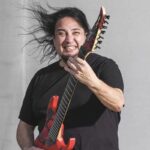


Sebastian Bach recently shared his first statement about joining Twisted Sister for their reunion shows. He expressed his emotional reaction to the opportunity in an interview with Trunk Nation With Eddie Trunk.

The reunion stems from Twisted Sister’s 40th anniversary plans for their debut album. These plans were delayed after Dee Snider’s health-related withdrawal.
The statement revealed Bach’s deep personal connection to the band and his feelings about stepping in as Snider had to step down due to health issues. Bach fronted Skid Row from 1987 to 1996. He brings vocal experience from high-profile replacements like his 2016 stint filling in for Axl Rose in AC/DC.
“Well, I have tears in my eyes right now. I am SMF Number Two. I was named that by Dee Snider. And I just have to say, I just got off the phone with Dee Snider. We talked for about 45 minutes, and we were both kind of getting teary eyed,” Bach said.
Bach went on to explain his lifelong fandom of the band and how their music influenced his own artistic journey.
“I just put out a [solo] record called ‘Child Within The Man’, and one of my favorite all-time bands is Twisted Sister. And the music of Twisted Sister makes me feel like a child within the man. This is what I was talking about on my new record, how rock and roll music, it has a life of its own. You’re talking to a guy here — I used to go to school and I used to paint the Twisted Sister logo on the back of my jacket in liquid paper thinking that looked cool [laughs] — whiteout,” he continued.
The former Skid Row frontman emphasized his genuine appreciation for the band’s catalog. He compared his situation to other notable rock substitutions.
“So I am a real fan — I am a fan of this music, and that is really, number one, why I’m doing it. And also to honor the legacy of these songs. And I look at it like when Paul Rodgers came in [to sing] for Queen, or when [Guns N’ Roses frontman] Axl [Rose] came in for Brian Johnson [in AC/DC]. I am a fan of Twisted Sister and I always have been, and I love this music. I love it. I love ‘Tear it Loose’. I love ‘Destroyer’. I love ‘The Price’. I mean, you talk about [classic Skid Row songs like] ’18 And Life’ and ‘I Remember You’. Well, you know what? I locked myself in a room rehearsing to ‘The Price’. And these songs are how I learned how to rock,” Bach explained.
Bach’s involvement with Twisted Sister represents a significant moment in both artists’ careers. It brings together two influential voices from the heavy metal scene.
The collaboration comes at a time when both musicians have established themselves as enduring figures in rock music. Bach’s career spans decades, from his breakthrough with Skid Row in the late 1980s to his continued solo work and various musical projects. His vocal range and stage presence have made him a sought-after performer for special collaborations and tribute performances.
Twisted Sister formed in 1972. The band became one of the most recognizable bands of the 1980s heavy metal scene. Their theatrical performances and anthemic songs like “We’re Not Gonna Take It” and “I Wanna Rock” helped define the era’s sound and visual style. The band’s influence extended beyond music. Their rebellious image and message resonated with multiple generations of rock fans.
The upcoming reunion performances mark a rare opportunity for fans to experience Twisted Sister’s catalog with a new vocal interpretation. Bach’s extensive experience with both original material and cover performances positions him well for this challenging role. His previous work has demonstrated his ability to honor classic material while bringing his own distinctive style to the performance.
This collaboration also highlights the interconnected nature of the rock and metal community. In this community, mutual respect and shared musical heritage often lead to unexpected partnerships. The emotional connection Bach described in his statement reflects the deep bonds that exist between artists who have shaped the genre’s evolution over the decades.


