





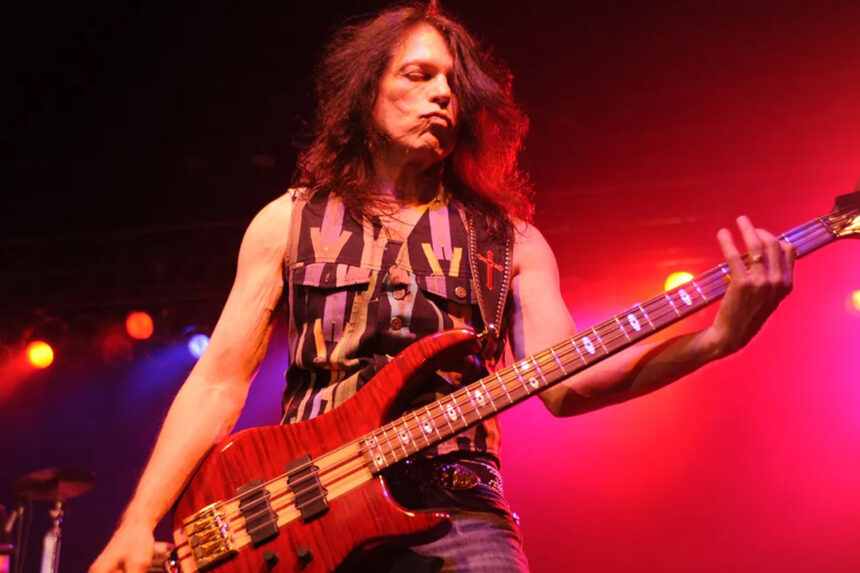
Rudy Sarzo has opened up about using artificial intelligence in the production of his new solo song. He addressed the topic in an interview shared on Border City Rock Talk.

The bassist recently released a track called “Your Heart Is The Road.” He spoke candidly about his decision to use AI during the making of the song, drawing a comparison to other common but undisclosed practices in the music industry.
“I come clean [about that],” Sarzo said. “There’s even bands on the road that perform live with tracks, and they don’t tell people that, ‘Hey, we got tracks. Okay, everybody, we got tracks.’ And they don’t do that. But I come clean. I say, ‘Yeah, I use artificial intelligence.'”
Sarzo went on to explain the financial reasoning behind his choice, citing the realities of independent music releases.
“I don’t have a budget,” he continued. “Who has a budget? I don’t have a budget to go home, [spend] 10 grand and dump it in the studio just for songs that [will be released independently to all the streaming services].”
Sarzo’s transparency stands out in an industry where the use of AI and production aids is widespread but rarely acknowledged. His willingness to address it openly puts him in a distinct position among veteran rock musicians navigating the modern independent music landscape.
“Your Heart Is The Road” features a hybrid approach. It blends AI-generated elements with Sarzo’s live performance to build a fuller sonic texture without requiring a complete band setup in the studio. The result is a production method that prioritizes creative output over conventional recording costs.
The financial barrier Sarzo describes is a reality shared by a large portion of independent rock artists. Many musicians working outside major label structures have turned to AI tools for mixing, composition assistance, and production support. This shift is a direct response to the prohibitive cost of traditional studio work.
The broader conversation around AI in music production has intensified in recent years. Debates center on transparency, copyright, and creative authenticity. Sarzo’s comments add a grounded, practical voice to that discussion — one rooted not in ideology, but in the economics of releasing music independently.
The rock community continues to grapple with where AI fits within the creative process. For artists like Sarzo, the answer is straightforward: it is a tool that makes independent releases viable, and one that deserves to be acknowledged rather than hidden.