




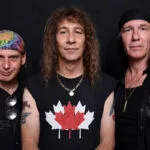


Falling in Reverse frontman Ronnie Radke addressed the issue of fake social media accounts impersonating him, warning his fans to stay alert in a video shared on Instagram.
During the statement, Radke responded directly to fans who had flagged suspicious accounts using his name to solicit money and sexual encounters. He made clear that he would never reach out to fans for such purposes.
“How you guys doing? Someone said, ‘Ronnie, one of your TikTok accounts is messaging me to get other girls’ hope if they don’t know it’s fake. It’s so odd,'” Radke said. “Dude, you gotta be f*cking retarded to know it’s not me. I’m not gonna be f*cking messaging you, asking you for money, or even messaging you in general for any reason.”
Radke went on to reassure fans that he would never privately message them. He also called out one of the fake accounts by name.
“I’m not gonna message you ever, dude. I promise you. I’m not asking for money. They’re asking to hook up. I mean, dude, come on. You think I’m doing that to you? The f*ck?” he continued. “Thank you for telling me that, honestly. You know that it’s not true, so I’m not judging you at all. Put the account name in the chat. What’s the name of the account? RonnieRadkee12.”
He then urged fans to use common sense when encountering accounts with zero followers claiming to be him.
“I mean, dude, these people, if anybody falls for that, they’re f*cking stupid as shit. Holy,” Radke said. “‘Hey, what’s up? My name’s Ronnie. I wanna have sex.’ Zero followers. You know what I mean? You don’t have to DM me anything. Fish and dope. Most people won’t fall for that.”
“And honestly, if you fall for that, you kind of deserve it. Like, you gotta use your head, man. It’s like 2026. It’s so fucking obvious it’s not me. Can we not DM people for sex anymore? Yeah, of course you do, but if it’s not me, RonnieRadkee12.”
When one fan pushed back, saying Radke was being too harsh given their personal experiences, he responded with visible frustration.
“Someone said, ‘Ronnie, if you only knew what I’ve been through, you wouldn’t say I’m stupid.’ Oh, here we go,” Radke said. “‘You don’t know what I’ve been through. You are too cruel.’ Oh my God, dude.”
Radke’s comments serve as a direct warning to his fanbase to verify the authenticity of any account claiming to be him before engaging.
Radke’s warning reflects a growing problem that has plagued musicians and public figures across social media platforms for years. Celebrity impersonation scams have become increasingly sophisticated. Fraudsters create accounts that closely mimic the names, profile pictures, and posting styles of well-known artists in order to deceive fans.
These scams typically follow a familiar pattern. A fake account with a slightly altered username — such as an added number or extra letter — contacts fans directly, often posing as the celebrity offering exclusive meet-and-greets, merchandise, or personal conversations, before eventually requesting money or personal information. The low follower count on such accounts, as Radke himself pointed out, is one of the most telling red flags fans can use to identify fraudulent profiles.
The issue is not unique to Radke. Numerous rock and metal artists have had to publicly address impersonation attempts targeting their fanbases. Some have gone as far as issuing formal statements through their management teams or verified social media channels. Fans, particularly younger or more emotionally invested ones, can be especially vulnerable to these tactics. Scammers often exploit the parasocial relationships that develop between artists and their audiences.
Social media platforms including TikTok and Instagram have policies in place against impersonation and provide reporting tools for users who encounter fake accounts. However, enforcement remains inconsistent. Fraudulent accounts are often replaced quickly after being taken down. Experts and platform safety advocates have repeatedly urged users to rely only on verified, blue-checkmark accounts when interacting with public figures online.
Radke’s decision to name the specific fake account — RonnieRadkee12 — and address the issue publicly during a live session is consistent with how many artists have chosen to handle the problem. They address it directly and transparently, using their own platforms to reach fans before more damage is done.


