



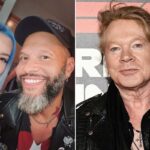



Roddy Bottum, keyboardist for the legendary band Faith No More, recently opened up about his decision to keep his sexuality private throughout his time with the group. This interview was shared on Wall of Sound.

When asked whether his sexuality was an issue within Faith No More and if that was what prevented him from coming out sooner, Bottum reflected on the band’s supportive environment and his own internal struggles.
“I don’t think [so]. I think it was just an inherent thing. If you had asked me or asked any of the members of the band, like, ‘Is it a deal at all that Roddy is gay?’, it was so not a deal,” Bottum explained. “We lived in San Francisco. All of the people in the band were so open-minded, they were all encouraging, but in my head it was something different and I just wasn’t willing to go there. And that’s on me. I talk that about that a lot in the book.”
Bottum acknowledged the personal toll his silence took on his closest relationships within the band. He reflected particularly on his relationship with bassist Billy Gould, whom he has known since childhood.
“Billy and I were best friends since the time we were very young, really young kids. Billy’s the bass player of Faith No More. And, yeah, the fact that I wasn’t able to be open with him about my sexuality, it still is something that’s kind of a weird rub for me. It’s not cool. I wish I would’ve had the wherewithal to be open. I mean, he was one of my best friends,” he said.
Bottum emphasized that the barrier to openness came from within himself. His upbringing and cultural context shaped this internal struggle rather than any lack of acceptance from his bandmates.
“So, amongst the band, it wasn’t on them, it was on me. I just wasn’t willing to go there with them based on the childhood that I had and the culture that we lived in. It was really difficult. But definitely they’ve only been supportive and understanding in that plight of mine.”
Bottum’s reflections in this recent interview provide deeper context for his broader journey as one of rock music’s most significant queer voices. His upcoming memoir offers an intimate look at the complexities of identity, acceptance, and artistic expression that have defined his life.
Bottum came out as gay in a 1993 interview with The Advocate, making him one of the first openly gay musicians in the heavy metal and hard rock genres. These genres were largely heteronormative at the time. This groundbreaking moment came years after his internal struggle with his identity, highlighting the courage it took to be openly gay in a rock music landscape that offered few role models or precedents for such visibility. Ultimate Metal documented this pioneering moment.
Bottum’s memoir, titled The Royal We, is set to be released in November 2025. The book chronicles his transformative journey from Los Angeles to San Francisco, where he found a vibrant queer art scene and formed Faith No More. KET Brussels notes that the memoir delves into his experiences as a young gay man searching for identity and community. It also explores his struggles with heroin addiction, the impact of the AIDS crisis, and his rise to fame. San Francisco in the early 1980s emerges in the narrative as both a sanctuary and a crucible, where Bottum encountered a flourishing queer art scene fueled by punk and performance.
Beyond his work with Faith No More, Bottum has continued to advocate for greater openness and representation in the music industry. He has composed music for several films with gay themes, including the gay romantic comedy Adam & Steve (2005). Anti Hero Magazine highlighted this commitment to LGBTQ+ visibility through his artistic work. His legacy as a queer icon in rock music continues to inspire conversations about authenticity, acceptance, and the importance of creating safe spaces for artists to be their true selves.


