

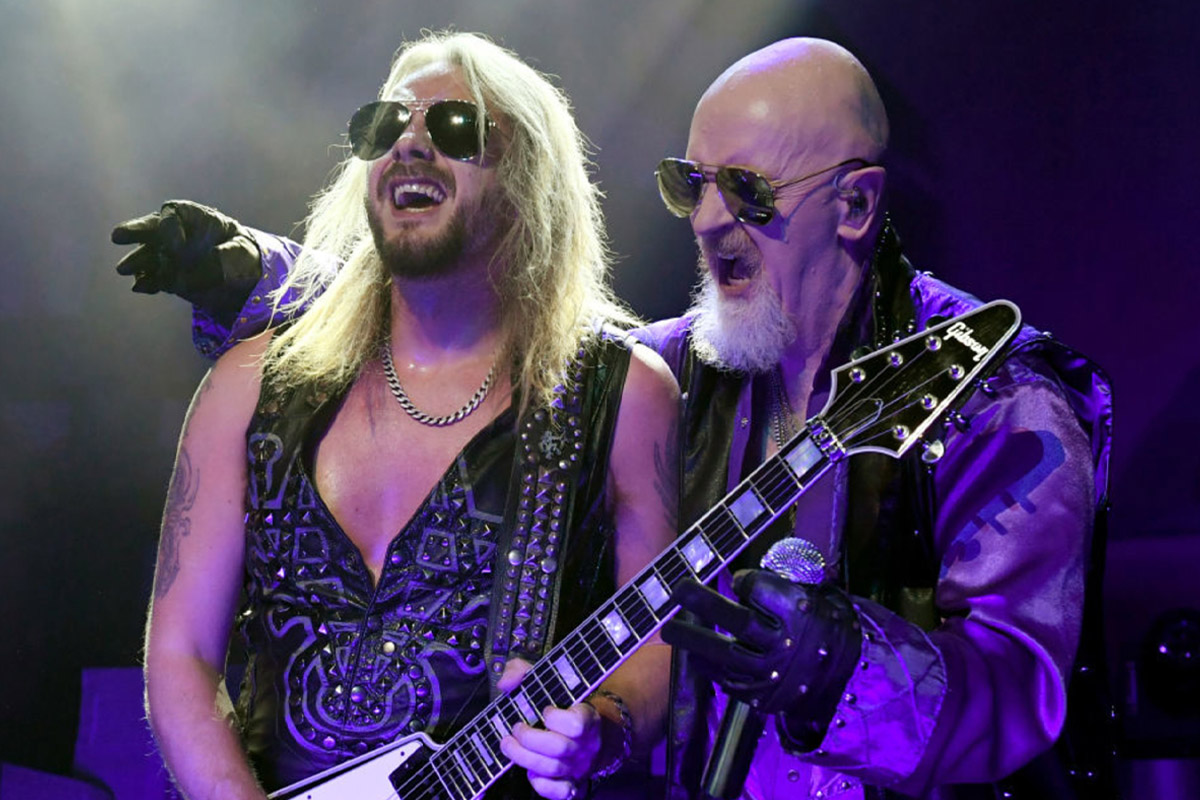
Rob Halford recently revealed an amusing behind-the-scenes story about how Richie Faulkner nearly missed his opportunity to join Judas Priest. This story was shared during a Q&A session at Rock-n-Roll Fantasy Camp 2025. The incident highlights an unexpected communication mishap that could have changed the band’s history.

During the Q&A with Dave Ellefson, Halford explained the initial contact process and the confusion that almost derailed the guitarist’s recruitment. The video posted by Robert Moseley on YouTube captures Halford describing how persistence ultimately led to a successful audition.
“With Richie, we sent him emails, and he kept deleting them because he thought it was a joke,” Halford said. “Honestly, we sent him six emails, delete, delete, delete. And then somehow somebody said, ‘You keep deleting these emails from Judas Priest?’ ‘Oh, it’s spam, dude, it’s spam.’ ‘No, it’s not. They really want you to be in touch.'”
Once Faulkner realized the emails were genuine, the band arranged a meeting and jam session. Halford recalled the immediate chemistry they discovered. “We were already playing and Richie came up to London and we just chit-chatted briefly,” Halford continued. “We need a few moments, and the feels are there, and so we talked for about 10 minutes, and I said, ‘Let’s just jam.’ So we set up a stack for him in Glenn’s studio, and I said, ‘Just go and play and get loose.’ He goes up in the room and starts playing, and we just look at each other, ‘This is the guy.'”
A simple email mishap could have altered the trajectory of one of rock’s most iconic bands. However, Faulkner’s journey to that pivotal moment was marked by even greater challenges than just spam folder confusion.
Faulkner had to borrow train fare from his mother to afford the trip to meet the band in London, Bravewords reported. This financial constraint made the audition even more significant. Had he not made that journey, or had the emails continued to be dismissed as spam, the opportunity might have been lost entirely. The guitarist’s determination to travel despite limited resources demonstrated the kind of commitment and passion that Judas Priest was seeking.
The audition itself was notably informal compared to what one might expect for such a legendary band. Gibson noted that the band was looking for someone who could mesh with their culture and contribute ideas, not just a “hire gun” to play the notes. Glenn Tipton subtly tested Faulkner’s musical instincts in a relaxed setting. He listened to the guitarist dial in his sound while Faulkner played in the studio. This approach reflected the band’s philosophy that chemistry and camaraderie offstage were just as important as technical ability.
The band’s focus on finding the right fit rather than simply the most technically proficient player proved to be the right decision. Ultimate Classic Rock detailed how Faulkner was encouraged to bring his own style to the audition while respecting the legacy of Judas Priest and previous guitarist KK Downing. This balance between honoring the band’s history and allowing for fresh creative input became central to his role in the group.
Faulkner’s story serves as a testament to the importance of being ready for unexpected opportunities and the value of authenticity in joining an established band. From nearly missing recruitment emails to borrowing train fare and impressing the band with his musicianship and personality, his path to becoming Judas Priest’s guitarist demonstrates that sometimes the most significant career moments come through persistence, determination, and a bit of luck.


