

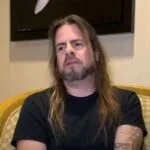
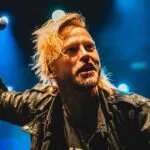


Queensrÿche vocalist Todd La Torre recently opened up about his vocal care routine — and the lack thereof — debunking common singing myths in a Q&A video posted on Facebook. The singer responded to fan questions about whether he relies on any special methods or secret concoctions to keep his voice in top form.

La Torre’s answers were candid and, at times, surprising. He revealed that his approach to vocal health largely defies the conventional wisdom many singers swear by.
“I’ve had days where I did everything you’re supposed to do by the book and didn’t sing that well, and then there are other times where I’ve had a Coca-Cola, I’ve eaten a piece of pizza pretty much right before I went on stage, and had some of the best performances of my life,” La Torre said.
He did acknowledge some general best practices, while still questioning their effectiveness.
“Obviously, rest is best. And I don’t think that drinking hot tea or anything does anything actually to the vocal cords, but I do think that it does feel soothing to have a hot beverage,” he continued. “A lot of people like Throat Coat tea. That’s a thing that a lot of singers seem to go for. You know, rest, a lot of water, hydration is always the best. Hydrating from the inside out to the vocal cords and those tissues are always recommended.”
La Torre also addressed his unconventional stance on vocal warm-ups and formal training.
“I don’t do any vocal warm-ups, really. I never really have, and so I’ve never taken vocal lessons or anything like that. I don’t really follow really kind of the rules that so many singers seem to adhere to or be so strict about,” he said. “I feel like if I don’t acknowledge them, they don’t really apply to me. But I know some other great singers never warmed up either. I’m told Ronnie James Dio never really did. Rob Halford, same thing. So, some people have their special regimen that they do to keep their vocals in check.”
When it came to lifestyle choices, La Torre pointed to a few key factors that he believes have made a real difference.
“I don’t drink alcohol; I never have. I quit smoking cigarettes three and a half years ago, so I’m sure that that helped. But pretty much just not speaking on tour and lots of water,” he said. “And also, when you do sing, exercising that full range. I feel like it’s like a weightlifter. If you stop lifting heavy weights, when you go to lift that heavy weight, you’re not gonna be able to. So I always try to exercise my full range.”
La Torre indicated that he plans to continue posting Q&A videos for fans, with more answers to follow in upcoming installments.
La Torre’s unorthodox philosophy is not a recent development. It is rooted in a career built entirely on natural instinct and self-discovery. His approach has remained consistent since long before he stepped into one of rock’s most demanding vocal roles, and it continues to define how he operates both on stage and in the studio.
La Torre joined Queensrÿche in 2012, replacing original frontman Geoff Tate following a period of significant internal conflict within the band. His arrival was immediately impactful. He demonstrated a rare ability to faithfully recreate Tate’s classic high-register vocal style while bringing his own power and consistency to the role. The move effectively revitalized the band’s live performances and studio output at a critical moment in their history.
Since taking over as frontman, La Torre has appeared on several Queensrÿche studio albums, including the self-titled 2013 release and the 2019 record The Verdict. These contributions cemented his place as a central creative force within the group. His tenure has been widely credited with stabilizing the band and restoring confidence among longtime fans who had grown uncertain about the group’s direction.
Despite never having taken a formal vocal lesson, La Torre has spoken openly about encouraging other singers to trust their instincts. “I would like to encourage you to be a lot more playful with your metal vocal exercises,” he has said. This reflects a philosophy that prioritizes intuition and exploration over rigid methodology. That mindset has clearly served him well across more than a decade at the helm of one of progressive metal’s most celebrated acts.
Beyond his live work, La Torre has also been transparent about the technical side of his craft. In the studio, he tracks vocals through a Shure SM7B microphone. His processing chain includes a de-esser, EQ, and the Screamer plugin — a setup he has described as central to achieving his signature tone. On stage, he relies on custom in-ear monitors from Dream Earz to maintain precise audio reference during performances. This underscores that while his vocal preparation may be unconventional, his attention to the craft itself remains meticulous.


