

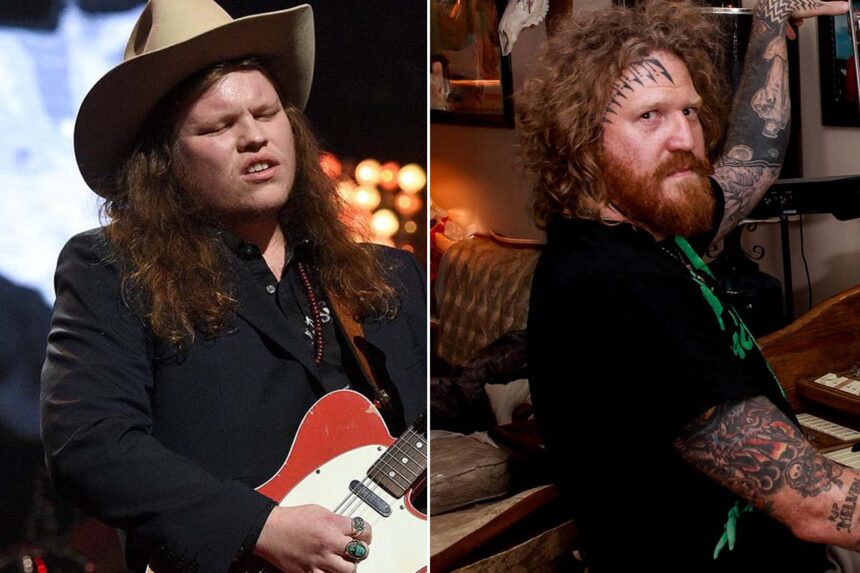
Marcus King opened up about his complicated experience bringing Brent Hinds on tour. He shared the story on the Joe Rogan Experience.

King explained how he extended an invitation to Hinds following his departure from Mastodon. He viewed it as an opportunity to support one of his musical heroes. However, a series of erratic incidents ultimately forced King to remove Hinds from the tour.
“Brent and Mastodon kind of had a mutual agreement that he would leave the band, so he was doing his solo thing, and he’s one of my heroes,” King said. “I was like, ‘I’ll take you out, sure,’ and he just threw it together somehow.”
Despite his good intentions, the partnership quickly unraveled. King described the moment that made the decision unavoidable.
“Then I ended up having to kick him off the tour, which broke my heart,” he continued. “But he kind of forced my hand. The night in question, I walked outside, and he had this tour manager named Angela, and she was crying, and my tour manager was holding her, and she was crying. I was like, ‘What happened?’ She said, ‘I walked into the dressing room, and Brent was peeing on the floor. I said, “No, no, you have to stop.” So then he peed in his mouth.'”
King also recalled sharing the story at Hinds’ funeral with fellow musician Matt Pike, who offered a telling response. “At his funeral, I told Matt Pike that story,” King said. “He was like, ‘Yeah … and? That’s normal.'”
The anecdote, darkly comic as it is, speaks to a broader truth about Hinds. Those closest to him understood that his chaos was inseparable from his genius. The people who loved him most had long made peace with that.
Brent Hinds was a founding member and lead guitarist of Mastodon, the Atlanta-based progressive metal band he helped build into one of the most critically acclaimed acts in heavy music. His playing style blended Southern rock, psychedelia, and technical metal. It became a defining element of the band’s sound across albums like Leviathan, Blood Mountain, and The Hunter. His departure from Mastodon marked the end of an era for a band that had carried his fingerprints since its formation in the late 1990s.
Hinds had long been open about his struggles with substance abuse and the personal turbulence that followed him throughout his career. His erratic behavior was well-documented within the music community. Yet it never diminished the reverence his peers held for him as a player. For many younger guitarists, including King, Hinds represented a raw, untamed approach to the instrument that was impossible to replicate and difficult to ignore.
Matt Pike, the guitarist for Sleep and High on Fire, was among Hinds’ closest friends in the heavy music world. His reaction to King’s story at the funeral — unbothered, almost amused — captured the way those in Hinds’ inner circle had come to understand him. To them, the extremity of his behavior was not a shock but a signature.
Hinds passed away following his exit from Mastodon. He left behind a legacy that stretched far beyond the band. His influence on a generation of guitarists remains intact. King’s willingness to share both the admiration and the heartbreak of their brief time together is a testament to the complicated, irreplaceable figure Hinds was in American rock music.


