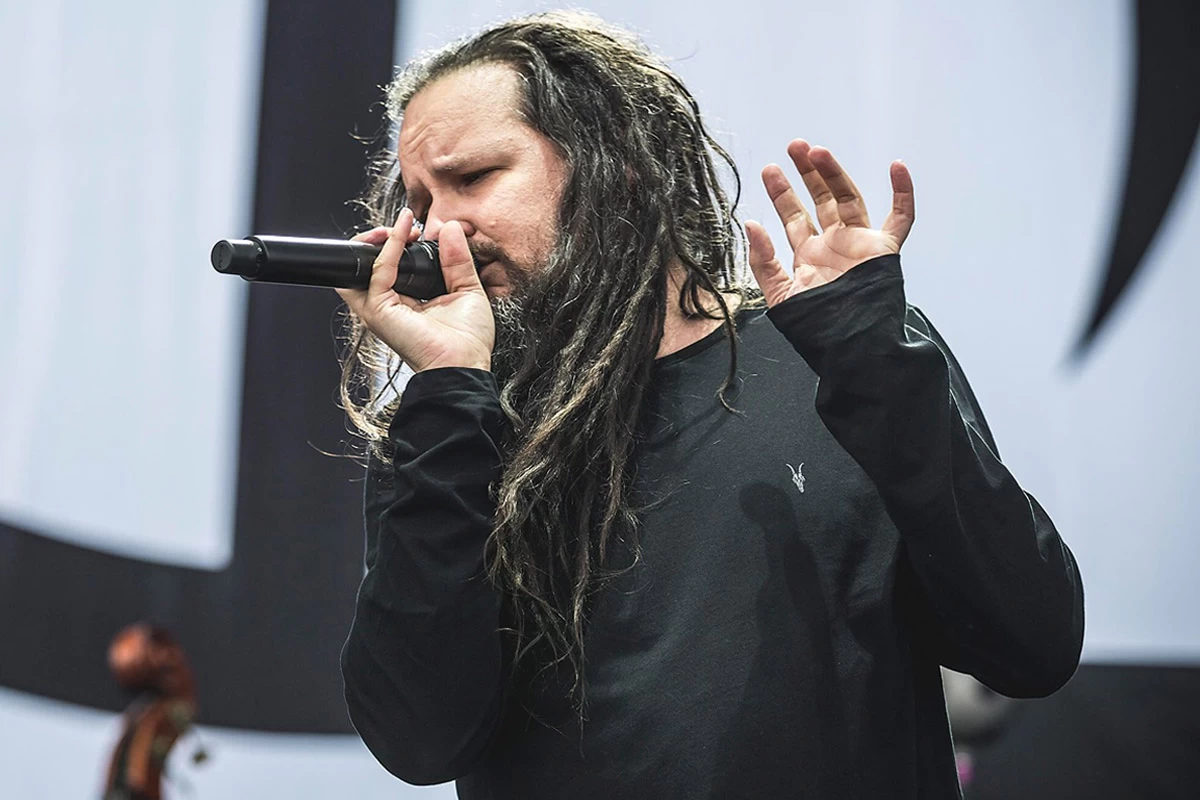




Skillet frontman John Cooper addressed longstanding criticism that his band’s hard rock music is demonic or sinful. He shared his perspective in a conversation with David A.R. White.

Cooper began by drawing a comparison to musician Lenny Kravitz, recalling a documentary in which Kravitz described struggling to fit neatly into any single category throughout his career.
“Yeah, for sure. I remember watching a documentary about Lenny Kravitz years ago, and I remember Lenny Kravitz saying, ‘I was too black for a lot of people, and I wasn’t black enough for other people. I wasn’t rock and roll, but I was too rock and roll,’ where he was trying to find his lane. It was some kind of quote like that,” Cooper said.
He then explained how that same sense of not fitting a single label has applied to Skillet’s music and identity over the years.
“And I always felt that was with Skillet. It was, like, ‘It’s too heavy, but it’s not heavy enough.’ ‘It’s too spiritual, but it’s not overtly Christian enough.’ ‘It’s too this.’ And I think for us — so, yes, we’ve dealt with it. I think for us, it was just, like, ‘Hey, I’m gonna be real. I’m gonna be myself. I’m gonna be unapologetically authentic,’ and I know that some people are not going to like that we sound a certain way, or that I said something a certain way, or that I’ve got tattoos all over me, or whatever it may be. And I don’t really care. I’m not trying to please them. I will never be able to please them,” Cooper continued.
Cooper went on to reflect on his upbringing in the church and why he no longer tries to convince certain critics that his music isn’t inherently evil.
“That’s one of the things I learned growing up in the church I grew up in, which had a lot of great things about it. But I just know for a fact I will never be able to convince a Bill Gothardite [follower of the teachings of American Christian minister, speaker, and writer Bill Gothard, who previously said listening to Christian rock is ‘fellowship with demons’] or somebody from your Mennonite church, I will never be able to convince them that hard rock is not evil,” he said.
He concluded by explaining his approach to those who hold firm to that belief, while remaining open to respectful dialogue.
“They just believe that the music is inherently full of the power of Satan, and there’s nothing I can do, and so there’s no reason to try. So for me, I just went, ‘Hey, I’m not here to do that with them. I’m just gonna be myself and be full of joy.’ And if I meet somebody that really does wanna have a good-faith debate about it, I’ll talk with them about it,” Cooper said.
This is far from the first time Cooper has had to defend Skillet’s sound against accusations of spiritual wrongdoing. The criticism has followed the band through some of its biggest recent moments.
Skillet’s first-ever Christmas single, a heavy rock rendition of “O Come, O Come Emmanuel,” drew a wave of backlash last year after some listeners branded the track “demonic” because of its distorted guitars and driving drums. Cooper said he initially thought the accusations were a joke, noting that the band hadn’t faced pushback like that in roughly two decades. Despite the controversy, the song went on to hit No. 1 on five separate Billboard charts, turning the criticism into an unexpected commercial boost.
Cooper has continued to push back on the broader idea that any style of music carries inherent evil. He has argued that music itself does not belong to the devil. The real issue, he says, lies in an artist’s intent rather than the sound of the instruments. Cooper has even recalled that his own mother once believed loud guitars and drums were satanic, a belief he says reflects a misunderstanding of the Gospel rather than a truth about rock music.
Skillet’s staying power despite decades of criticism speaks for itself. The band has sold more than 23 million albums worldwide, earned two Grammy Award nominations, won a Billboard Music Award, and placed three albums inside the Top 5 of the Billboard 200. That track record underscores Cooper’s point that Skillet has thrived by staying true to its identity rather than bending to critics on either side of the “too Christian” or “not Christian enough” divide.
“I would say, I just think that you’re misunderstanding something very basic, which is that music does not belong to the devil,” Cooper has said, reinforcing the same message he shared with White about refusing to let outside judgment define the band’s sound or faith.