






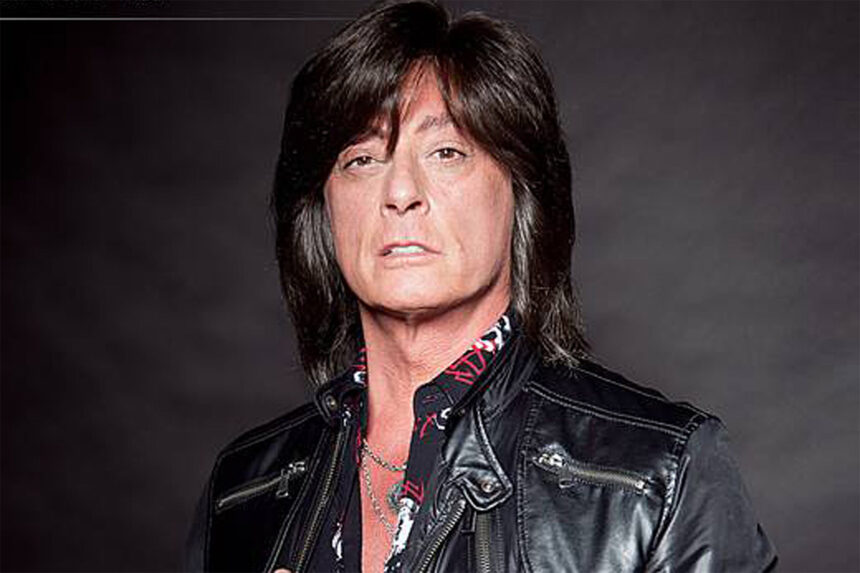
Former Rainbow frontman Joe Lynn Turner recently opened up about his decision to stop wearing a wig, sharing his personal journey in an interview published on Cassius Morris Official.

Turner was diagnosed with alopecia at the age of three and began wearing a wig at 14. He explained that his choice to remove it was rooted in a desire for honesty — with himself and with his fans.
“I took the wig off, the hair, ’cause everybody out there knew I was wearing it. 90% of these guys, the old timers anyway. And I’m not gonna mention names because I got no ax to grind. And that’s a personal thing,” Turner said. “I had alopecia at three years old. I’m sure you probably read about it. So [my reason for wearing the wig] was one of trying to fit in with the uniform of rock ‘n’ roll. Everybody had long hair in rock ‘n’ roll. Only in the last — I don’t know — maybe 10 years, they started to [come out with] a more brutal type of look, which went right along with ‘Belly Of The Beast’, and I said, ‘It’s time for me to be truthful to myself and to everyone.'”
Turner went on to describe the emotional weight of the decision, reflecting on years of insecurity that stemmed from childhood.
“Talk about freedom. That is freedom. What I did was free me. It opened me up completely. And here’s the amazing thing, because it was a psychological disadvantage in a way, because you’ve been made fun of all your life — kids at school, all that kind of stuff. Kids are cruel. And so you grow up with that and you try to get out of that shadow and you do a little Jungian shadow work and you try to break free from all that,” he continued. “But it’s so damn hard sometimes, because it’s ingrained in your emotions so deeply. But that portion of it, and what happened to me was I broke that wall. I broke through it, and I just went, ‘Man, this is just born again.’ Talk about born again. That’s really the feeling I had, was, like, ‘Here I am. It’s a whole new me.’ And everybody, and this was a great statement by my assistant. I gotta give her credit.”
He also shared a touching moment with his assistant, whose reaction reinforced his decision.
“She actually had tears in her eyes when she told me, she said, ‘You see, Joe — they love you even more. They call you brave. They call you courageous. They call you setting a new path. They call you iconic. They call you the Pharaoh.’ And I went, ‘Yeah, that’s something.’ The world really embraces you when you’re yourself,” Turner concluded.
Turner’s revelation marks a deeply personal chapter in a career that has spanned more than four decades. He rose to international fame as the lead vocalist of Rainbow in the early 1980s, replacing Dio-era predecessors and helping steer the band toward a more melodic, radio-friendly sound. His time with the group produced some of the era’s most enduring hard rock anthems, cementing his place as one of rock’s most recognizable voices.
Beyond Rainbow, Turner’s career has been defined by a remarkable range of collaborations. As noted on Wikipedia, he also served as the lead vocalist for Deep Purple from 1989 to 1992, contributing to the album Slaves and Masters. He has maintained an active solo career, releasing music well into the 2020s. His album Belly Of The Beast, which he referenced in the interview, represents his most recent solo work. It reflects a harder, more stripped-down aesthetic that aligns with his decision to shed the wig and embrace a more authentic image.
Alopecia, the condition Turner has lived with since early childhood, is an autoimmune disorder that causes hair loss and affects millions of people worldwide. The National Alopecia Areata Foundation notes that the condition can develop at any age and often carries significant psychological and social consequences, particularly for those diagnosed in childhood. Turner’s candid account of being bullied as a child and spending decades concealing his condition speaks to an experience shared by many who live with visible differences.
The decision to go public without the wig also reflects a broader cultural shift in how public figures — particularly in rock music — approach vulnerability and authenticity. In recent years, several high-profile figures have spoken openly about alopecia, helping to reduce stigma around the condition. The American Academy of Dermatology reports that alopecia areata affects approximately 6.8 million people in the United States alone. Turner’s openness is not only a personal milestone but a potentially meaningful moment for fans who share similar experiences.
For Turner, the response from his fanbase appears to have been overwhelmingly positive, validating what was clearly a difficult but liberating choice. His story serves as a reminder that authenticity — even when hard-won — can deepen the bond between an artist and their audience in ways that performance alone never could.


