




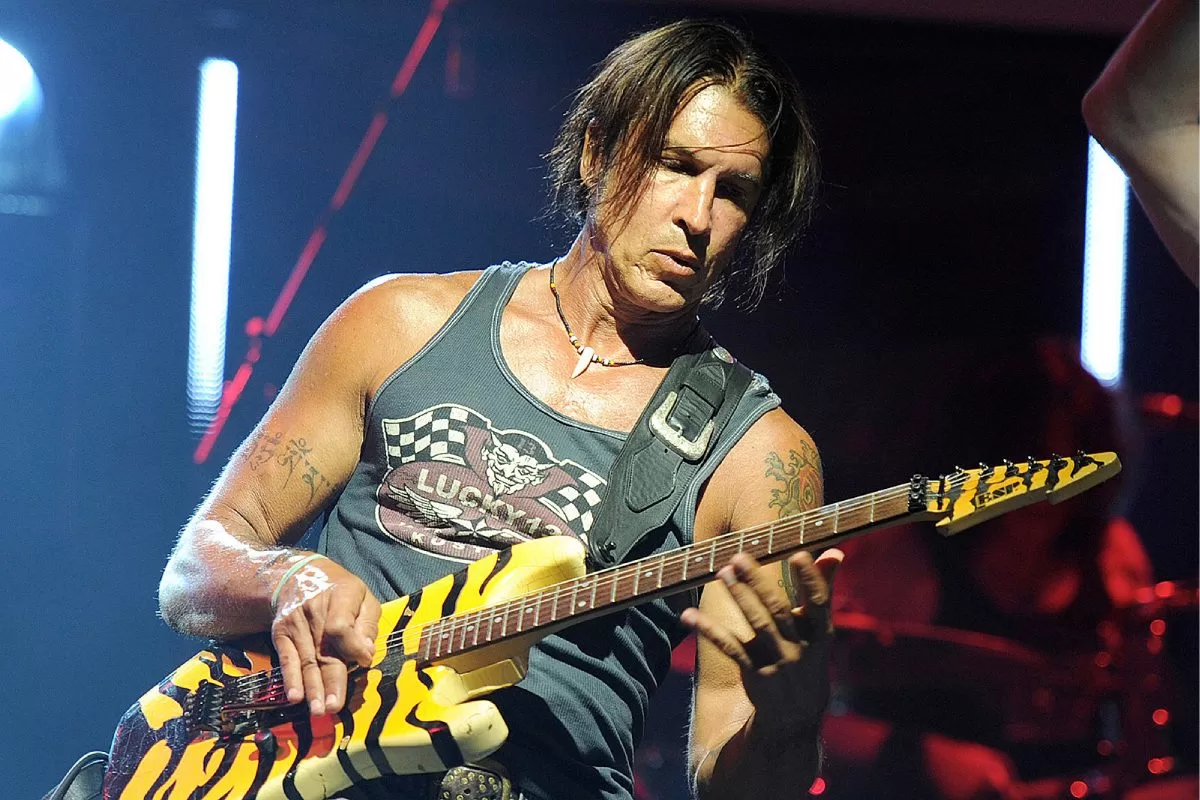
Former Dokken guitarist George Lynch recently shared his thoughts on the future of guitar heroes in rock music, discussing his approach to playing and whether the genre will see another iconic guitar figure emerge. His comments were made during an interview with The Music Zoo.

Lynch explained his holistic approach to guitar playing, emphasizing that he views all aspects of musicianship as interconnected rather than separate skills.
“I don’t really differentiate so much between soloing, chording, and writing songs,” Lynch said. “I think it’s all just one thing, especially live.”
When addressing the possibility of future guitar heroes emerging in rock music, Lynch expressed skepticism about whether such figures could still capture audiences in today’s musical landscape.
“I don’t know if there’s ever going to be a guitar hero again, you know?” he continued. “I just don’t know if that’s going to happen. I mean, how could it? Everything’s been done [already].”
Lynch’s perspective reflects on both the evolution of guitar playing and the challenges facing musicians in an era where many techniques and styles have already been explored and established.
Lynch’s comments carry particular weight given his own status as one of the defining guitar heroes of the 1980s metal scene. Shredaholic reported that his lead work on Dokken’s string of gold albums in the 1980s cemented his status among guitar heroes, establishing him as a key figure in the hard rock and heavy metal guitar landscape.
However, Lynch’s journey wasn’t without its challenges. Shredaholic noted that despite being hugely successful, Lynch left Dokken in 1990 due to tension with lead vocalist Don Dokken. This departure marked a significant turning point in his career, leading him to form his own band, Lynch Mob.
The formation of Lynch Mob allowed Lynch to explore different musical territories that he felt were restricted during his time with Dokken. Ultimate Guitar revealed that Lynch pursued bluesier aspirations he felt unfulfilled in Dokken. This suggested that his former band didn’t really satisfy his bluesy musical inclinations.
Lynch’s evolution from Dokken to Lynch Mob demonstrates the very creative challenges he now sees facing potential guitar heroes. His own career trajectory shows how even established guitar virtuosos must continually reinvent themselves and find new creative outlets. This perhaps explains his skepticism about whether future musicians can break through in an increasingly saturated musical landscape.