


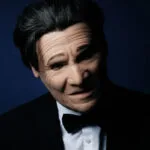




KISS frontman Gene Simmons recently shared his views on wealth inequality and billionaires. He defended the existence of ultra-wealthy individuals in a statement reported by The Rich Reporter.

The musician’s comments came in response to a specific question about whether billionaires should exist in society.
When asked “What do you say to people who thinks there shouldn’t be any billionaires in the world?” Simmons offered a detailed defense of wealth concentration.
“Then you wouldn’t have industry and you probably wouldn’t have a job, because a poor person never gave me a job,” Simmons said. “And even if you’re an asshole hundred billionaire who never gave a penny to charity, you want another yacht and you want another mansion and you wanna buy Vermont and all that, and you’re totally selfish.”
He continued his argument by emphasizing the economic impact of wealthy spending.
“Well, that selfish billionaire asshole is providing money so you can feed your family and put a roof over your family’s heads because the people have to work to get him whatever he wants,” he explained. “He creates jobs simply because he’s spending money. And if you don’t have enough money to spend, you’re not affecting the economy. You’re not creating jobs. It’s not a romantic answer, but it bears noting.”
Simmons then referenced former British Prime Minister Margaret Thatcher to support his position on capitalism versus socialism.
“Margaret Thatcher, who was the former Prime Minister of England and was called the Iron Lady, socialists were not crazy about her,” he said. “But it also bears noting, there’s not a single successful socialist country that didn’t go bankrupt and have revolutions and everything because it doesn’t work. Capitalism is messy and there’s a lot of corruption, but it actually works without the government getting too much involved.”
The musician concluded by challenging the common phrase about money being the root of evil.
“And Thatcher said, it is foolhardy, the English nice way of basically, you’re a f*cking moron, that’s in English, if you think money is the root of all evil,” Simmons stated. “No, no, it’s the opposite. Lack of money is the root of all evil. If I have $100 million in my pocket, why would I grab a gun and go to a 7-Eleven and say, you know, give me a dollar? Why would I do that? That doesn’t mean there isn’t high-stakes shenanigans and stuff, but violent crime comes from people who don’t have money.”
Simmons’ controversial statements reflect his long-standing advocacy for capitalism and wealth accumulation. These are views he has expressed throughout his career both as a musician and businessman.
The KISS bassist has built a substantial business empire beyond music. His ventures span from merchandising to real estate investments. His entrepreneurial success has made him one of the wealthier figures in rock music. This likely influences his perspective on economic systems and wealth distribution.
The debate over wealth inequality has intensified in recent years. Various public figures have taken different stances on the role of billionaires in society. Some argue that extreme wealth concentration creates economic imbalances. Others like Simmons contend that wealthy individuals drive economic growth through job creation and investment.
Simmons’ reference to Margaret Thatcher aligns with his broader conservative economic philosophy. The former British Prime Minister was known for her free-market policies and privatization efforts during the 1980s. Supporters credit these policies with revitalizing the British economy. Critics argue they increased inequality.
The musician’s assertion about the relationship between poverty and crime touches on a complex socioeconomic issue that researchers continue to study. Economic factors can influence crime rates. However, the relationship between wealth, poverty, and criminal behavior involves multiple variables. These include education, social services, and community support systems.


