
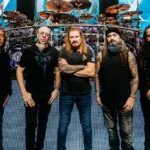






Exodus guitarist Gary Holt recently weighed in on the long-debated question of thrash metal’s hierarchy. He made a bold claim about his band’s legacy in a recent interview.

The comments came in response to a direct question about whether Exodus deserves a spot in an expanded “Big Five” of thrash metal, alongside Metallica, Megadeth, Slayer, and Anthrax. Holt didn’t hold back in his answer.
When asked, “If there was a Big Five, instead of Big Four of thrash metal, would Exodus be in it?” Holt responded without hesitation.
“Of course. No one else even has a right to claim it. You know, I mean Testament sold a ton of albums in recent years since our reunion and theirs. They sold more,” Holt said. “But they came years later. We’re the only other possible option. Some fans are gonna say, ‘F*ck that,’ you know, Overkill or whatever.”
Holt also took the opportunity to push back against the American-centric nature of the debate. He advocated for recognition of the German thrash scene.
“And I always stand up for the Germans. Everybody always says who belongs in it and always picking from the American groups,” he continued. “But I’m like, ‘What about Destruction? What about Kreator?'”
The remarks are likely to reignite discussion among thrash metal fans about Exodus’ place in the genre’s history. The debate over whether the “Big Four” designation still accurately reflects the scene’s full legacy is far from settled.
Holt’s confidence in Exodus’ claim is rooted in a history that stretches back further than most fans may realize. The band formed in 1979, placing them at the very foundation of the Bay Area thrash movement. Their 1985 debut Bonded by Blood is widely regarded as one of the genre’s landmark records. That early footprint gives Holt’s argument a historical weight that goes beyond mere rivalry.
His credibility on the subject is also reinforced by his own direct ties to the Big Four. Holt joined Slayer in 2011 as a touring guitarist and later contributed to the band’s final studio album, Repentless. He remained with the group through its farewell run until 2019. Few figures in thrash metal can claim such a close connection to both the Big Four and the bands challenging its boundaries.
Holt’s defense of the German scene carries real historical backing. Kreator, Sodom, Destruction, and Tankard form what is widely recognized as the German “Big Four” of thrash. This movement, known as Teutonic thrash, emerged in parallel with the American Bay Area scene during the 1980s. It was defined by raw aggression and unrestrained ferocity, setting it apart from its American counterpart.
Kreator, one of the bands Holt specifically named, has roots going back to 1981 when the group was still operating under the name Tormentor. Alongside Destruction and Sodom, they helped build a scene that rivaled the American movement in influence, even if it never received the same mainstream recognition.
The “Big Four” label was coined largely through commercial visibility and American media reach. It has always left out bands whose contributions to the genre were just as foundational. Whether the conversation is about Exodus or the Teutonic scene, Holt’s comments serve as a reminder that thrash metal’s history is far wider than four names.
Source: Metal Injection


