

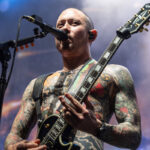





Falling in Reverse singer Ronnie Radke recently shared a controversial take on the LGBTQ community, addressing what he perceives as an inconsistency within the movement. His statement was posted on X (formerly Twitter).
In his comment, Radke questioned the definition of bisexuality in relation to the broader spectrum of gender identities.
“The ‘b’ in LGBTQ stands for ‘bi’ meaning they’re attracted to only 2 genders, male and female,” Radke said. “But aren’t there more genders than that? Bigots.”
Radke’s latest statement continues a pattern of controversial commentary on gender identity and LGBTQ issues that has defined much of his public discourse in recent years. His remarks have consistently sparked debate around how sexual orientation labels are defined and understood within contemporary discourse.
In 2023, Radke was banned from TikTok and shadowbanned on Twitter following statements about trans women and biological gender, The PRP reported. His previous comments questioned the concept of trans women experiencing periods, suggesting it mocks women’s biology.
Radke has also expressed skepticism about the use of pronouns and gender identity more broadly. He compared his hypothetical identification as a black man to the concept of identifying as a woman, Loudwire documented. Additionally, he has critiqued what he perceives as an overemphasis on gender discussion in the United States. These statements have drawn significant backlash from the LGBTQ community and supporters who view his comments as insensitive or offensive.
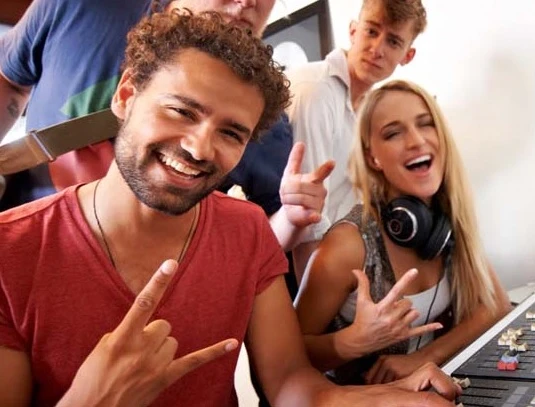
Despite his controversial statements on gender identity, Radke has taken steps toward inclusivity in other contexts. He included LGBTQ influencers in the music video for “All My Life,” which was released during Pride Month, Loudwire noted. The video featured Blair White, a transgender social media personality. Some viewed this move as a step toward inclusivity, though it stands in contrast to his more critical public statements about gender and sexual orientation.
Radke’s comments have led to significant backlash from the LGBTQ community and supporters. Many have criticized his views as outdated or offensive. The ongoing controversy highlights the tension between free speech and the impact of public statements on marginalized communities, a debate that continues to evolve in the digital age.


