





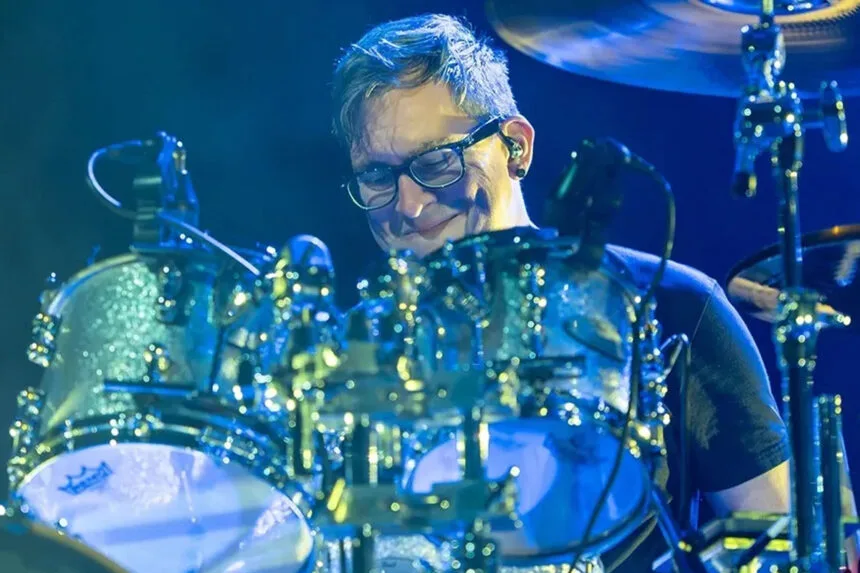
Chevelle drummer Sam Loeffler has spoken out about the widespread use of pre-recorded backing tracks during live performances, sharing his firsthand observations in a video published by 99.7 The Blitz.

Loeffler made clear that Chevelle performs entirely without backing tracks. He also acknowledged that many other bands rely heavily on them — with some artists not playing their parts live at all.
“We have no tracks. We have nothing. We’re just three guys playing this music. So many other bands are coming out, and they’ve got track after track,” Loeffler said. “Some of these guys, and I’m not gonna say who, aren’t playing any of it. All of it is on tape. I don’t wanna tell you either. But it’s true. And look, whatever — ’cause I don’t think anybody cares. I honestly don’t think anybody cares.”
Loeffler also touched on how this realization personally affected him as a drummer, particularly regarding technically demanding parts.
“As a drummer, I can tell you, when I found out that a lot of these drummers aren’t actually playing the part — they’re playing some of it, but they’re not playing the double parts, I was, like, ‘Oh, I feel so much better,'” he continued. “‘Cause I couldn’t play that. It’s insane.”
Loeffler stopped short of naming specific artists, but his comments shed light on a broader conversation around authenticity in live music performances.
His remarks are the latest entry in a debate that has divided the rock and metal community for years — one that touches on what audiences are actually paying to see when they buy a concert ticket.
The controversy is far from new. Wikipedia notes that miming and the use of pre-recorded material in live performance has been a contentious issue for decades. This includes programs like Top of the Pops, where prerecorded tracks were eventually permitted under strict rules following earlier bans on miming altogether.
Not all artists who use backing tracks do so to replace their live playing entirely. Jamzone reported that controversies around the practice often resurface when artists cancel shows after losing laptops containing their track setups — a telling sign of how dependent some performances have become on pre-recorded material.
Some musicians have been open about drawing a line between supplementing a performance and replacing it. Shinedown guitarist Zach Myers defended the band’s use of string tracks and other layered elements in certain songs, arguing that support tracks are not the same as the wholesale replacement of live playing that critics often assume, as Loudwire covered.
The distinction Loeffler appears to be drawing sits at the heart of the ongoing debate — between bands that use tracks for supplemental support and those where core instrumental parts are entirely pre-recorded. As the use of backing tracks becomes more common across rock and metal touring, questions about transparency and audience expectations are unlikely to go away anytime soon.


