
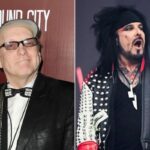





Former KISS guitarist Bruce Kulick recently shared a health update revealing he underwent heart valve replacement surgery. He posted the announcement on X (formerly Twitter).

The musician provided details about his successful procedure and current recovery status in his social media statement.
“Heart valve replacement surgery was a success! On the road to recovery, taking it one step at a time,” Kulick said. “Grateful for my Heart Surgeon and his staff. And special thanks to Lisa for her love and support.”
Kulick served as KISS’s lead guitarist from 1984 to 1996. He appears to be in good spirits as he focuses on his recovery process.
Gene Simmons sent a message to Kulick after his health update and wrote, “Go Bruce, Go. With Lisa by your side, you can lick anything. You know we’re all rooting for you. And can’t wait for you and Lisa to cook up a new batch of pancakes for all of us.”
Kulick’s situation reflects a growing trend of musicians successfully returning to their careers after heart procedures. The recovery timeline for heart valve replacement has improved significantly with modern surgical techniques. This offers hope for performers facing similar health challenges.
AdvaMed reported that Rolling Stones frontman Mick Jagger underwent non-invasive heart valve replacement surgery. He was able to resume touring within weeks of his procedure. The minimally invasive approach, known as TAVR (Transcatheter Aortic Valve Replacement), has revolutionized recovery times for patients, particularly those in physically demanding careers like music performance.
The success rate for such procedures is encouraging for musicians and their fans. Heart Valve Surgery documented that TAVR procedures have a 95% success rate. Patients typically return home within days rather than the weeks required for traditional open-heart surgery. This advancement allows performers to maintain their touring schedules with minimal disruption.
Recent examples from the music industry demonstrate the effectiveness of modern cardiac care. Cleveland Clinic documented musician Rick Beato’s experience with mitral valve repair in July 2024. He felt well enough to return to his home recording studio just one week after the procedure. Beato reported experiencing a significant boost in energy levels despite the temporary presence of a chest scar from the surgery.
The timeline for musicians returning to full performance capacity varies depending on the specific procedure and individual recovery. For non-invasive procedures like TAVR, patients can typically begin low-intensity activities within 2-3 weeks. This compares to the 4-8 weeks required for traditional open-heart surgery recovery.


