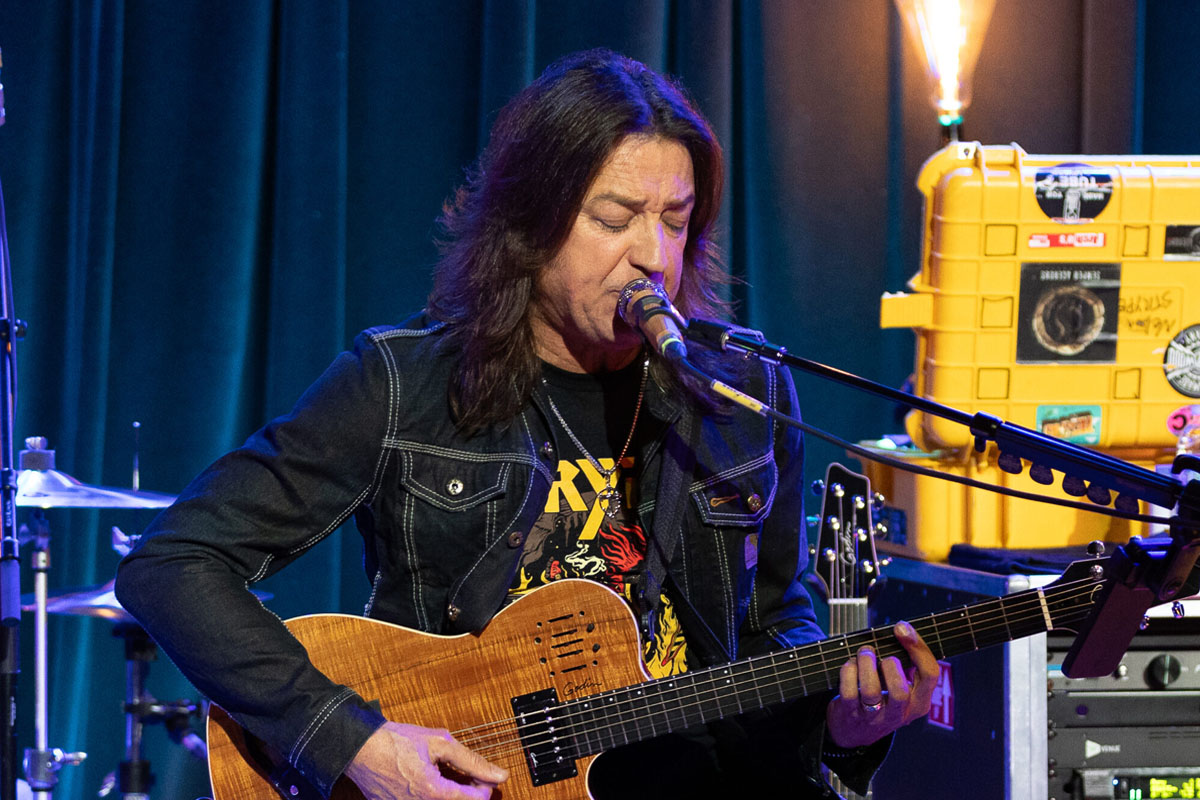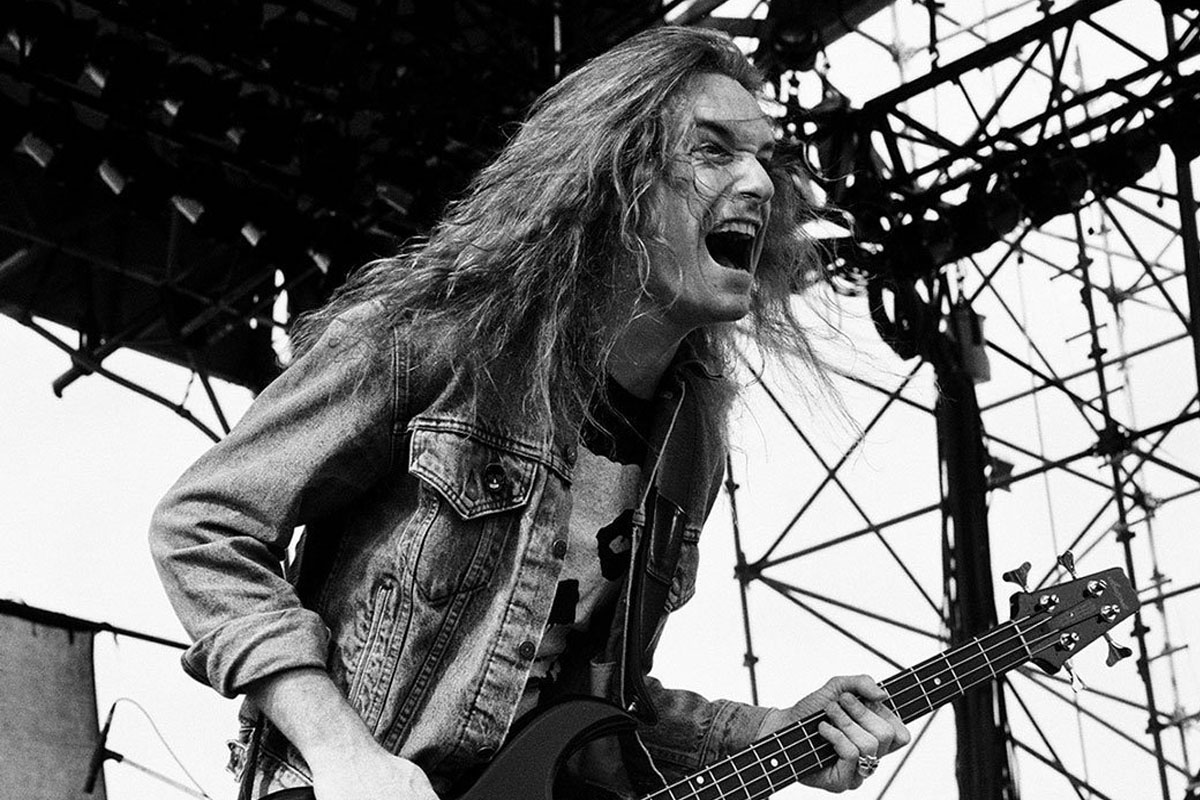






Billy Sheehan recently opened up about his departure from David Lee Roth’s band. He shed light on the creative and personal shift that occurred during the recording of Skyscraper in an interview shared on Rock Interview Series.

Sheehan reflected on the stark contrast between the loose, collaborative atmosphere of Eat ‘Em and Smile and the more isolated, polished recording process that defined Skyscraper. He explained how that change ultimately led to his exit from the band.
“Skyscraper was a whole different world. It’s not a record I really gravitated towards when it was done. It seemed kind of stiff to me,” Sheehan said. “With Eat ‘Em and Smile we were hanging out, having fun, playing in one room, and we wrote the stuff together. It was for fun, and we’d go out afterward and have some drinks, have a couple of beers at the end of rehearsal. We had a riot — it was a great hang. Skyscraper was different.”
Sheehan went on to describe how the recording sessions for Skyscraper stripped away the communal energy the band had previously shared.
“When we recorded it, we recorded one guy at a time. I’d go into the studio, and there’d be nobody there but me and the producer. I played to Gregg’s drums and a rough [cut] of Steve’s guitar, and then I’d leave. Then one of the other guys would go in,” he continued. “Something happened, and the whole atmosphere changed. That’s why, at the end of that, I was out of the band because it was not my thing.”
Roth’s pursuit of a more polished sound on his second solo album came at the cost of the camaraderie that had made the band’s earlier work so memorable. That shift ultimately reshaped the band’s entire lineup.
Skyscraper was released on January 21, 1988, on Warner Bros. Records. It arrived on the heels of the commercially and critically successful Eat ‘Em and Smile World Tour of 1986–1987. Despite the internal tensions, the album proved to be a commercial triumph. It peaked at No. 6 on the Billboard 200 and sold two million copies in the United States.
A key part of Roth’s new direction was the addition of keyboardist Brett Tuggle. His presence signaled a deliberate push toward a more radio-friendly, polished sound. That shift in musical vision fundamentally altered the dynamic that had made the original lineup so effective. It replaced spontaneous chemistry with a more calculated studio approach.
Sheehan was not the only one who eventually moved on. Guitarist Steve Vai also departed from Roth’s band following the Skyscraper era. This marked the complete dissolution of what many consider one of the most technically gifted lineups in hard rock history. The original Eat ‘Em and Smile band never recorded together again.
Skyscraper remains the last album to feature both Sheehan and Vai alongside Roth. The record’s hit single “Just Like Paradise” reached No. 6 on the Billboard charts and cemented its commercial legacy. The loss of the band’s founding chemistry, however, proved to be a turning point that Sheehan has never forgotten.