



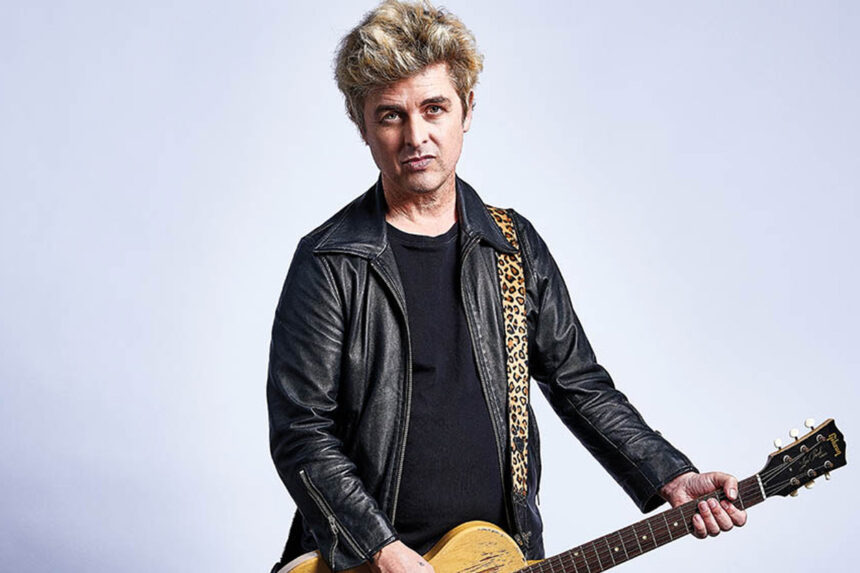
Green Day frontman Billie Joe Armstrong addressed the topic of musicians expressing political opinions publicly. He explained why he does not consider Green Day a political band.

Armstrong reflected on the origins of Green Day’s political image. He traced it back to the unexpected emergence of American Idiot, while emphasizing that the band’s music has always been rooted in personal experience rather than political agenda.
“It’s scary to put yourself out there like that. It’s not, like, it’s not something that came natural to me,” Armstrong said. “When we first started, we were not about politics at all, even though that we came from a very, like, outspoken scene. It was just a really crazy time, and then ‘American Idiot’ just kind of came out of nowhere.”
Armstrong went on to describe the emotional and cultural context behind the album. He noted how its themes continue to resonate today.
“It was done with heart and, like, and done from a place of total kind of confusion about why the world is changing in sort of this dark and ugly place,” he continued. “And I think that that kind of rings true, especially right now, and now we’re just sort of bombarded by the algorithms. Which is really interesting because when I watched, like, the World Cup, like, I felt really proud of America.”
“I felt like the World Cup did more than the UN has done in the last 20 years, you know. And so that was a really beautiful thing and how people were like, you know, oh my God, like, ranch dressing, you know, this is amazing. You know, and this is like crack. You’re like, well, we have tons of that, you know.”
Wrapping up his thoughts, Armstrong acknowledged growing uncertainty with age. He clarified the band’s true identity as personal storytellers rather than political voices.
“So sometimes the older I get, the less I know, you know, and things become more and more confusing,” he said. “And I think that that’s kind of what the songs, you know, when they are political, that’s what they’re sort of about. And I think it’s important to have heart where it comes from too, and not being, like, a political band. Like, we’re definitely outspoken, but our songs are very personal and about documenting where you’re at that particular time in your life, as like a diary.”
Armstrong’s comments offer a candid look at how Green Day navigates the intersection of personal expression and political perception in their music.
The tension between Green Day’s personal roots and their political reputation has been a defining thread throughout the band’s career. American Idiot brought that tension sharply into public focus.
Released in September 2004, American Idiot is widely regarded as Green Day’s first explicitly political album. The record arrived during a charged moment in American history, with the country deep in the Iraq War and the presidential election season in full swing. Its title track and centerpiece songs were broadly read as critiques of war, media manipulation, and public credulity. These themes gave the band a political identity they had never previously claimed.
Before American Idiot, Green Day’s catalog leaned heavily on personal themes — suburban restlessness, adolescence, and emotional struggle. While political undertones existed in earlier work, the band had not positioned itself as a vehicle for social commentary. The shift that came with American Idiot was, by Armstrong’s own account, unplanned and organic rather than a deliberate reinvention.
The album marked a turning point in how punk rock engaged with mainstream political discourse. It drew comparisons to the protest traditions of the band’s punk forebears while maintaining an intimate, confessional quality. That combination — large-scale political commentary wrapped in personal narrative — is precisely what Armstrong continues to point to when explaining the band’s identity.
Green Day’s political reputation has only grown in the years since. The band has been vocal on issues ranging from war and government policy to civil rights and anti-fascism. Armstrong has made pointed public statements at various live performances. Yet even as the band’s outspokenness has increased, Armstrong has consistently maintained that the music itself is driven by personal truth rather than political platform — a distinction he clearly feels is worth defending.
Source: L.A. Times Entertainment


