

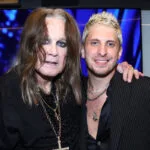




Justin Hawkins recently criticized artist Yungblud over the use of real-time pitch correction during live performances. His comments were shared on Justin Hawkins Rides Again.

Hawkins addressed the broader issue of autotune in the music industry. While many artists have experimented with the technology since its introduction, its use in live settings raises concerns about authenticity.
“When it first came out, everybody tried dabbled with it, and I think there’s a lot there’s a sort of temptation to use it,” Hawkins said. “You know, just to be competitive with the stuff that’s on the radio which is all tuned to have been an inch of his life.”
Hawkins specifically called out Yungblud. He cited evidence from other observers who have documented the artist’s use of real-time pitch correction during performances.
“And then you get artists like Yungblud who have been proven by people like wings of Pegasus to have been using uh real-time pitch correction live and that’s just that is really an embarrassment,” he stated. “Shouldn’t be happening.”
The musician suggested that closed side stages at festivals may indicate suspicious activity. This particularly applies to the use of autotune technology during live performances.
“If you’re not allowed side stage when you have an AAA pass at a festival because it’s a closed side stage, it’s usually a closed side stage because there’s something suspicious going on,” Hawkins explained. “Usually within that remit of usual usual stuff, I would say it’s probably because they’re running autotune in real time, which is a f*cking embarrassment.”
Hawkins concluded with a direct message to artists using such technology: “You shouldn’t be doing that. Yungblud, you shouldn’t be doing that. Just sing. If you can sing, sing. You don’t need that stuff.”
This latest criticism from Hawkins reflects an ongoing debate within the rock music community about authenticity and the role of technology in live performances. The debate raises fundamental questions about what constitutes genuine rock and roll in the modern era.
Louder Sound reported that Hawkins’ criticism of Yungblud’s live performance stems from concerns about the use of real-time pitch correction. He worries about authenticity in rock music more broadly. The controversy gained particular attention following Yungblud’s performance at the MTV Video Music Awards. Hawkins felt the artist’s use of modern production techniques clashed with the spirit of classic rock.
Hawkins has been vocal about his perspective on this issue. He described such performances as “rock n’ roll seen through an Instagram filter.” Architeg Prints noted that Hawkins defended his comments by stating he was not attacking Yungblud’s spirit or passion. Rather, he expressed skepticism about the direction of rock music and the increasing reliance on technology in live performances. He emphasized that his critique focused on the performance itself, not a personal attack on the artist.
The criticism has not gone without response. Ultimate Guitar reported that Yungblud and his supporters pushed back against what they view as outdated gatekeeping. Many argue that the younger artist is helping to breathe new life into rock. They contend that Hawkins’ comments are unnecessarily harsh and dismissive of evolving musical styles. Yungblud himself responded by calling his critics “bitter and jealous.” He suggested that some older artists are resistant to change and new voices in rock.
The debate ultimately reflects a generational divide within rock music. One side prioritizes traditional notions of live performance authenticity, while the other embraces technological innovation as part of modern artistic expression. As the conversation continues, it raises important questions about the future direction of rock and what audiences should expect from live performances in an increasingly digital age.


