
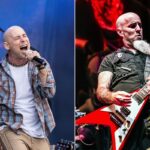


Faith No More co-founder Roddy Bottum recently reflected on his band’s challenging experience touring with Metallica and Guns N’ Roses in 1992. He shared his perspective in an interview with Birthday Cake For Breakfast.

Bottum discussed how the tour environment exposed him to what he described as the toxic culture prevalent in rock music at the time.
“I think it was a challenge, but, honestly, only for me,” Bottum said. “I think it was very much the rock and roll norm at that point. Misogyny, male aggression, toxic masculinity was all just part of the equation in that time, and everyone was on board for it. I don’t know anyone that wasn’t, honestly.”
The keyboardist explained how his bandmates and he felt isolated in their progressive mindset during the tour.
“I mean, our guitar player at the time — we had a very rock guitar player; he played a flying V guitar and he had long black, curly hair and he was very rocker sort of vibe, which is what we loved about him,” he continued. “He played guitar like that, kind of like Metallica played, and he was best buddies with Metallica. He was very much of that type of person. But the rest of us were all sort of leftist-leaning, progressive, weird artists, liberal minded. Billy [Gould], who I grew up with, who played bass for Faith No More and Mike [Bordin], the drummer, and Mike [Patton], the singer, we were all, like. ‘Oh, my,’ kind of blown away by the audacity of that environment.”
Bottum described feeling particularly alienated as a gay man in that environment.
“We couldn’t believe what we were seeing, but we were very much alone in that mindset,” he said. “Everyone on that tour, the Guns N’ Roses people, their crew, the Metallica people, their crew, Jim [Martin], our guitar player, probably a lot of our crew, they were down with the hedonism. They were okay with it, and it was just an era in which people got on board. Me being the gay man who sort of — I grew up with three sisters, basically — that was just offensive and wild and ‘what the fuck?’ to me, more than anyone else, for sure.”
The experience ultimately influenced Bottum’s decision to become more open about his sexuality in the press.
“It reaches a point in my life where recognizing that and seeing the potential association of us as a band and me in that band being sort of regarded as that was like, ‘no, no, no, no, no, no,'” he explained. “So after that point, I hadn’t really been open about my sexuality in the press, so it kind of did stir me on to making that declaration in the press and like talking about being gay. And that’s sort of when my story turns in the book.”
Bottum’s reflections shed light on one of rock history’s most notorious tours. The tour was plagued by problems from its inception.
Loudwire reported that the ill-fated stadium tour launched on July 17, 1992, at RFK Stadium in Washington, D.C. The tour was announced at a press conference at the Gaslight in Los Angeles on May 12, 1992. The tour quickly became marked by internal tensions and excess that would define its troubled legacy.
The stark differences in treatment between the bands highlighted the tour’s hierarchical nature. Faith No More Followers documented that Faith No More traveled by bus while the headliners chartered private planes. The band performed their 45-minute sets at 6 p.m. while Guns N’ Roses would arrive late and be transported in limousines backstage. These contrasts in treatment underscored the tour’s power dynamics and contributed to the tensions Bottum described.
The tour’s problems extended beyond cultural clashes, as operational issues plagued the massive production. The combination of two of metal’s biggest acts proved difficult to manage. Scheduling conflicts and backstage politics created an increasingly hostile environment for the opening act.
Faith No More’s time on the tour was ultimately cut short when they were fired on September 21, 1992. Wikipedia noted this was due in large part to the band’s dissatisfaction with Guns N’ Roses’ management and the overall tour atmosphere that Bottum described as toxic and alienating.


