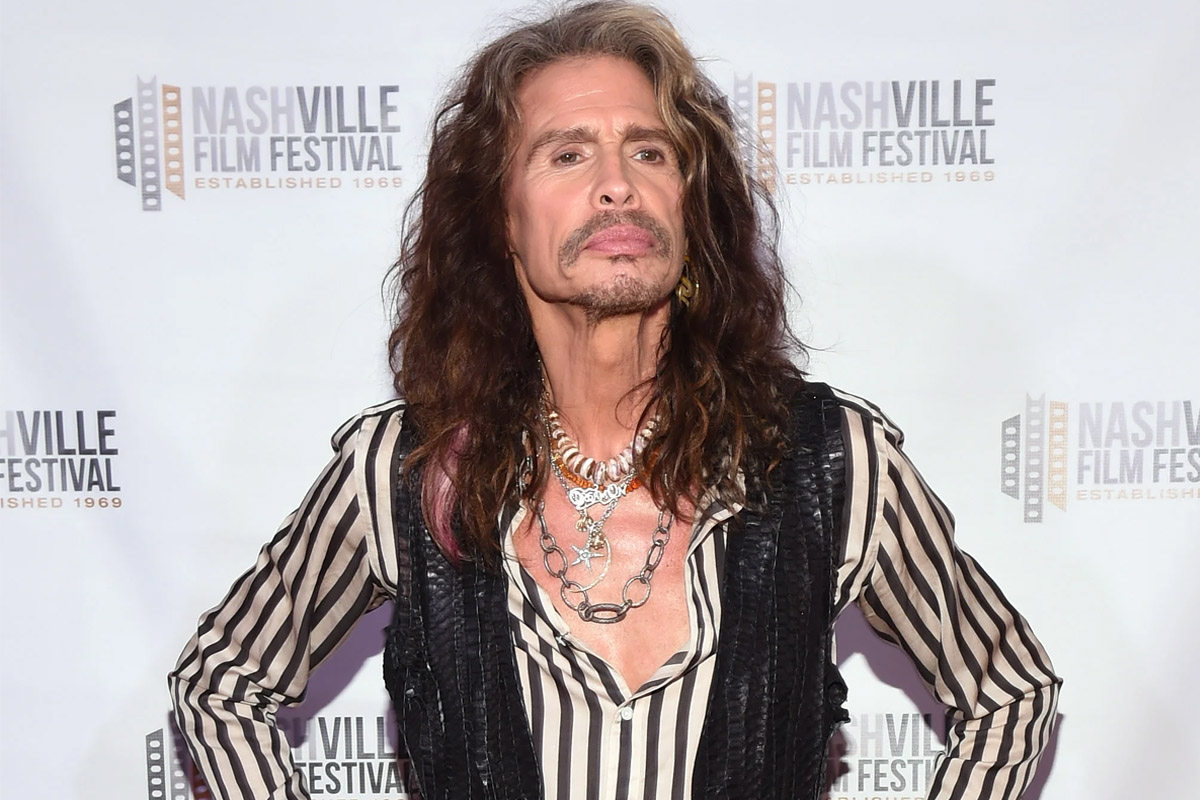






Reb Beach recently opened up about his experiences working with different bands. He particularly addressed his time with Whitesnake and the creative constraints he faced under David Coverdale’s direction in an interview with Guitar World.

The guitarist was asked about which band allowed him to fully express his musical creativity. This led to revealing insights about his studio experiences.
“Winger, for sure. I did a record with Doug Aldrich at his house, but we didn’t have an amp, so I went direct. He said he would do the thing where you mic up the amp later – re-amp it,” Beach said.
Beach then detailed his contrasting experience with Whitesnake’s David Coverdale. He explained the level of control the vocalist exercised over his guitar work.
“David Coverdale, for some reason, wanted my solos to be a certain way. The record I wrote with him, he said to Joel Hoekstra, ‘You can play whatever you want, but Reb, I am going to take you under my wing.’ He had to kind of approve my solos,” Beach revealed.
The guitarist noted that this control varied between projects. Some albums received more scrutiny than others.
“It wasn’t as much on the one I wrote with him, ‘Flesh & Blood’, but ‘The Purple Album’, he was all over my… What’s that Deep Purple song? ‘Mistreated’! Yeah, he was all over me on that one. I had to make David happy on that,” Beach continued.
Beach’s comments provide insight into the dynamics of one of rock’s most enduring partnerships. They highlight the balance between creative control and artistic collaboration that has defined his career across multiple bands.
Despite these creative constraints with Coverdale, Wikipedia reported that Beach has maintained a remarkably stable presence in Whitesnake since joining in 2002. He became the longest-serving guitarist in the band aside from Coverdale himself. His longevity in the role stems partly from his collaborative approach and professional attitude. These qualities have helped him navigate the band’s numerous lineup changes over the years.
Beach’s dual commitment to both Whitesnake and Winger has been manageable largely because of scheduling flexibility on the Winger side. Guitar World noted that Winger frontman Kip Winger has remained occupied with other projects including symphonies and Broadway shows. Meanwhile, drummer Rod Morgenstein teaches at Berklee College of Music for much of the year. This allows Beach to balance his responsibilities across both bands without major conflicts.
The guitarist’s tenure with Whitesnake has been particularly notable given the band’s history of frequent lineup changes. Beach himself noted in a previous interview that he’s “the 46th member of the band.” This highlights the numerous incarnations Whitesnake has undergone throughout its history, as Guitar World documented.
Since 2003, Beach has toured extensively with Whitesnake. He contributed to several acclaimed albums including “Good to Be Bad,” “Forevermore,” “The Purple Album,” and “Flesh & Blood.” His ability to adapt to Coverdale’s specific creative vision while maintaining his own musical identity has proven essential to the band’s continued success and his own career longevity in the competitive world of hard rock music.