

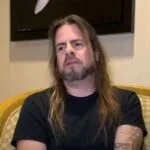
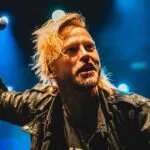


Queensrÿche vocalist Todd La Torre recently spoke out about his right to express political opinions publicly. He addressed the backlash he has faced from some fans in an interview shared on TV WAR.

La Torre reflected on the political history embedded in Queensrÿche’s music and drew a direct comparison to the challenges of speaking out in today’s deeply divided climate.
“I think that if you go back and you listen to the classic stuff, the beginnings, there is a lot of political messaging, or there are things that are very geopolitical, social — they’re very socially aware,” he said. “‘Operation: Mindcrime’, in that record there’s a lyric that says, ‘Educate the masses. Burn the White House down.’ If I wrote that lyric today in America, in the United States, where it is extremely divided — it is pure chaos, okay? — everything turns political. It doesn’t matter what I say or what I post — [even if it’s] not political, somebody will come on there and call me a socialist, communist libtard.”
La Torre then addressed the criticism he has received directly, making clear that he has no intention of staying quiet.
“Of course I faced backlash. I don’t care. Some people will say, ‘Shut up and sing. We don’t wanna hear your political view,'” he said. “My reply to that is, first and foremost, I am an American. Never mind the singer. I’m an American. I have every right. For someone to tell me to shut up is very anti-American, because we have the First Amendment, which is freedom of speech.”
He also touched on the broader social dynamics that fuel division, pointing to echo chambers and algorithmic bias as key contributors.
“You can say things I may disagree with. I can say things you disagree with,” he continued. “The problem is we have these echo chambers, and we have these people that are stuck in the algorithm of what they like… And also, there’s always somewhere where you can find someone to agree with you, and that validates your bias.”
The interview was conducted by TV WAR and published on May 31, 2026.
La Torre’s comments did not stop at defending his right to speak. He also weighed in on the current political landscape in the United States, adding another layer to the controversy surrounding his public statements.
Blabbermouth reported that La Torre claimed a growing number of Trump supporters are experiencing “buyer’s remorse.” The remark further fueled the debate around his willingness to engage with divisive political topics and drew both support and criticism from fans across the political spectrum, underscoring the very echo chamber dynamic he had described in the interview.
As Blunt Magazine noted, La Torre has been consistent in defending his right to speak out on politics. He framed his public commentary not as a departure from his role as a musician, but as an extension of his identity as an American citizen. His position reflects a broader tension that many rock and metal artists face when their political views intersect with their public personas.
The backlash La Torre has encountered is not entirely surprising given the band’s history. Operation: Mindcrime, Queensrÿche’s landmark 1988 concept album, was itself built on a foundation of sharp political and social commentary. This makes La Torre’s outspokenness less of an anomaly and more of a continuation of the band’s long-standing tradition of engaging with the world beyond the stage.
That historical context, however, has done little to shield him from modern-day criticism. As La Torre himself acknowledged, the current media environment is driven by algorithms and partisan echo chambers. This makes any public statement, political or otherwise, a potential flashpoint. His refusal to back down, he argues, is not provocation but principle.
Ultimately, La Torre’s stance serves as a reminder that the line between artist and citizen has always been blurry in rock music. For some performers, staying silent is simply not an option.


