



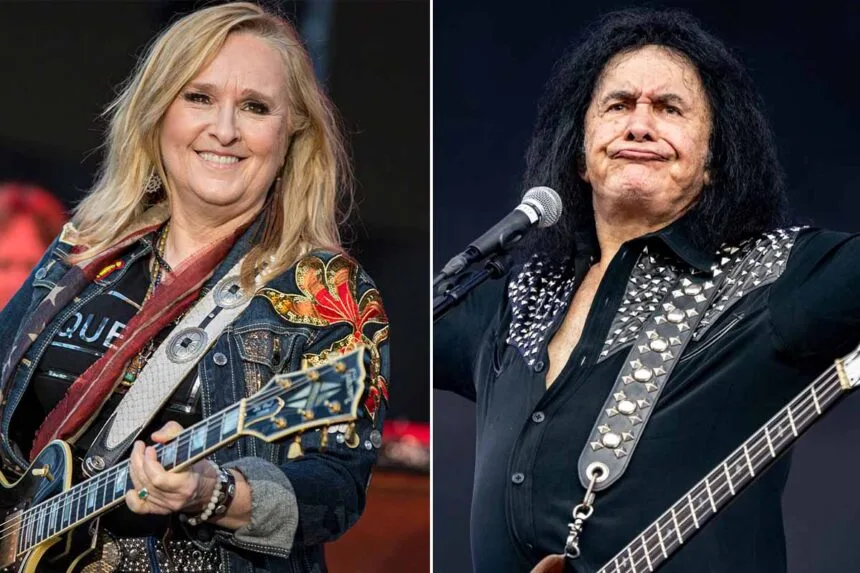
Melissa Etheridge recently responded to KISS frontman Gene Simmons’ controversial statements about hip hop artists not belonging in the Rock and Roll Hall of Fame. She shared her perspective in an interview with Rolling Stone.

The Grammy-winning artist offered a broader view of rock and roll’s influence and evolution in response to Simmons’ exclusionary remarks.
“There was that classic rock and roll we know, and then there’s everything that has been influenced [by it] and has that rock and roll spirit,” Etheridge said. “That’s your R&B, rap and country.”
She directly addressed Simmons’ position with a pointed critique of his narrow perspective.
“That says more about him [Gene Simmons] than anything,” she continued. “Rock and roll is a feeling. You can’t bottle it up and say, ‘This is mine, not yours.'”
Etheridge’s comments came after Simmons stated that hip hop artists don’t belong in the Rock Hall. He said “It’s not my music. I don’t come from the ghetto. It doesn’t speak my language, and I said in print many times hip-hop does not belong in the Rock & Roll Hall of Fame – nor does opera symphony orchestras.”
This debate reflects a broader conversation about the evolving nature of rock music and the Hall of Fame’s inclusivity. Etheridge’s perspective comes as she promotes her own genre-crossing work. This demonstrates the fluid boundaries between musical styles.
American Songwriter reported that Simmons has repeatedly doubled down on his controversial stance. The 76-year-old musician has faced significant backlash for his comments about hip-hop artists. He has maintained his position despite widespread criticism from the music community.
The Rock and Roll Hall of Fame has indeed inducted several hip-hop artists over the years. This directly contradicts Simmons’ assertions. Notable inductees include Grandmaster Flash and the Furious Five, who were among the first rap artists to receive the honor. More recent inductees like Jay-Z and N.W.A. prove the genre’s recognized influence on rock and popular music.
Vice noted that while complaining about hip-hop’s inclusion in the Rock Hall of Fame, Simmons also took shots at classical music. This suggests his criticism extends beyond just rap music. This pattern of exclusionary comments has drawn criticism from artists across multiple genres.
The controversy has sparked responses from hip-hop legends as well. TMZ revealed that Public Enemy’s Chuck D responded to Simmons’ remarks. He defended hip-hop’s rightful place in the Hall of Fame and highlighted the genre’s significant cultural impact and musical innovation.