

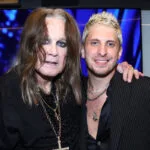





Trivium frontman Matt Heafy shared his experiences about early career challenges in a recent interview with 107.7 The Bone.

“I wish I knew. I mean to be 18 or 19 and to be ridiculed by your favorite bands from your childhood. That was heartbreaking,” Heafy said. “I’m fine with it now. I think the older I’ve gotten, I’m like, ‘They’re just humans. They’re just people.'”
“What’s interesting is I look at the music space now, and it’s the exact opposite. A new band comes around, and everyone’s accepting them,” he continued. “Everyone says, ‘This is the best.’ There’s no hazing, no bullying, and none of that stuff. I’m not saying I want people to have to go through that, but I will absolutely say it made me who I am today.”
“I feel like nowadays bands are able to blow up a little bit quicker because there’s more people into things that go outside of the mainstream, which is really cool,” Heafy explained. “It was just a different time.”
“We were still from that time where, you know, we co-headline with Slayer in the UK with their full original lineup, and half the crowd loved us and half the crowd hate us. We’d have to really fight,” he added. “We’d have shows in the early days of people waiting outside wanting to fight us, ‘cuz they didn’t like our music which is crazy. And nowadays, that doesn’t happen. So, it made us who we are.”
Heafy’s reflection on the band’s challenging early days reveals the significant evolution of the metal music scene and its treatment of emerging artists.
Biographical sources revealed that Heafy’s journey with Trivium started at age 12. He joined as the lead guitarist while his bandmates were between 15 and 16 years old.
Research by Heavyocity highlighted Heafy’s diverse musical influences. His style drew from Metallica, Swedish Melodic Death Metal, and even video game and anime music. These elements helped create Trivium’s unique sound.
The metal scene of the 2000s exhibited a strong sense of brotherhood and camaraderie among bands. These relationships often took complex forms. The metal music scene maintained a culture of privacy regarding such practices, unlike other communities where hazing was more openly documented.
Antihero Magazine documented Heafy’s vocal development journey. He initially struggled with uncertainty about his singing abilities. He later became the band’s lead vocalist. Through self-teaching and professional training, he learned to protect his voice while mastering various vocal techniques.


