




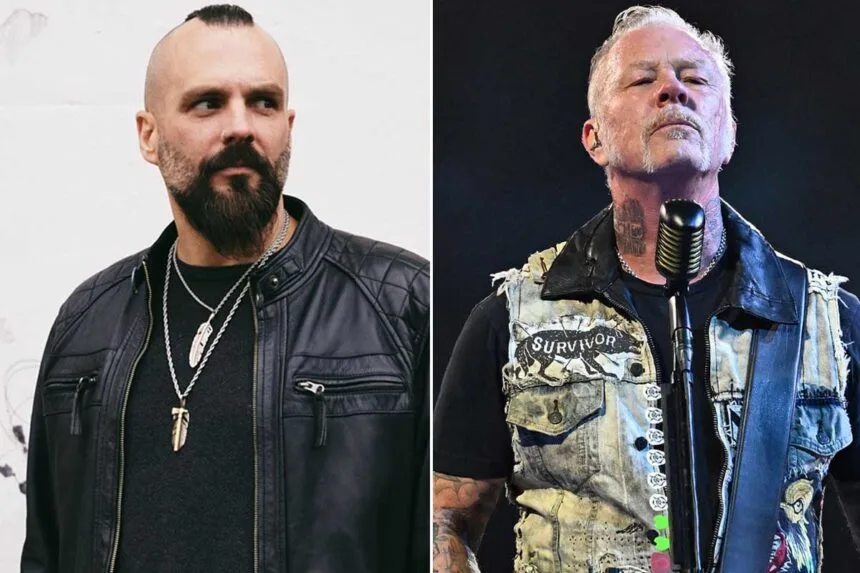
Killswitch Engage vocalist Jesse Leach recently opened up about his evolving relationship with Metallica’s iconic Black Album. He shared his thoughts in an interview with Mike Z.

Leach reflected on how his initial resistance to the record gradually gave way to a deeper appreciation. He admitted that he was once among those who criticized the album’s departure from Metallica’s earlier sound.
“Yeah, man, that [‘Black Album’] is a huge record. I look back on it, it’s got so many hits on it. For me, it was, obviously, such a radical change for that band. And I think at the time I didn’t appreciate it as much as I do now,” Leach said. “I think for me, I was one of those people who was, like, ‘Ah, it’s so different,’ but the more you listen to that record, the more it grows on you. And it’s still Metallica, but it was very different. And now, obviously, the hits — it’s ridiculous. ‘Enter Sandman’ was a big one for me. I still love that song. I can’t hate on it. When I was younger, I kind of did, though, to be fair.”
Leach went on to emphasize the importance of allowing bands the creative freedom to evolve. He pointed to Metallica’s recent output as evidence of their enduring relevance.
“You gotta allow bands to do what they gotta do. And Metallica’s one of those bands, even if they went a little that way, they came back in. The last two records have been great,” he continued. “They’re one of those bands — I can’t hate on Metallica. I can’t. They’re the forefathers of all of this stuff, and just those first four records alone — untouchable. Untouchable.”
Leach’s comments highlight a broader sentiment among rock and metal fans who have come to reassess the Black Album‘s legacy decades after its release. That reassessment is backed by numbers that are difficult to argue with.
Released in August 1991, Metallica’s self-titled record sold approximately 600,000 copies in its first week alone. It debuted at No. 1 in 10 countries and topped the Billboard 200 for four weeks. It has since moved an estimated 31 million physical copies worldwide and earned a 16-times platinum certification in the United States. These figures place it among the best-selling albums in music history.
The Black Album spent nearly 500 weeks on the Billboard 200. For a metal record to sustain that kind of presence across multiple decades is virtually unparalleled.
The divide the album created at the time of its release was real. Longtime fans of Metallica’s earlier thrash-driven sound felt the polished, radio-friendly production marked a sharp break from records like Master of Puppets and …And Justice for All. Leach’s admission that he shared that frustration as a younger listener reflects a reaction that was widespread across the metal community in the early 1990s.
As the frontman of Killswitch Engage — one of the most influential metalcore bands of the past two decades — Leach has long been vocal about the genre’s deep roots in traditional heavy metal. His reassessment of the Black Album carries particular weight. It comes from an artist whose own music has helped shape the next generation of heavy music fans, many of whom grew up with Metallica’s more accessible era as their entry point into the genre.
The Black Album‘s legacy only continues to grow. What was once a point of contention has become a defining chapter in rock history — one that even its harshest early critics have come around to embracing.


