


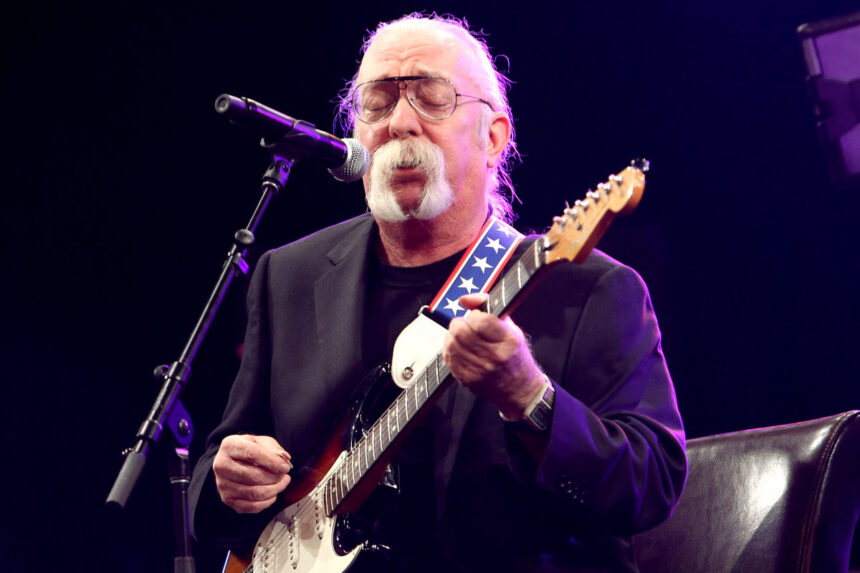
Jeff “Skunk” Baxter, the renowned guitarist from Steely Dan and the Doobie Brothers, recently opened up about surviving the excess of the 1970s music scene. He shared his thoughts during an appearance on The Magnificent Others with Billy Corgan.

The guitarist explained how his fear of losing his musical abilities served as a protective mindset during an era known for its dangerous excesses.
“Listen, I partied hard. And especially playing in country bands… So, a tough night at the Jack of Diamonds, you know, a bottle of Jack Daniels,” Baxter said. “I’m playing [pedal] steel on Talent Night, Thursday night doing Faded Love. Waiting for the two guys to finish killing each other so we can go into Foggy Mountain breakdown.”
Despite participating in the party culture of the time, Baxter maintained a crucial awareness that kept him from going too far.
“But there was always something in the back of my mind that scared me. Because I didn’t want to lose my ability. I didn’t want to lose my chops,” he continued. “I saw people who damaged themselves to the point where they lost something. That was always in the back of my mind.”
Baxter’s cautious approach to the 1970s party scene becomes even more significant when considering his pivotal role in shaping the sound of two of the era’s most influential bands.
Wikipedia reported that Baxter was a founding member of Steely Dan in 1972. He appeared on their first three albums including “Can’t Buy a Thrill,” “Countdown to Ecstasy,” and “Pretzel Logic.” His melodic, jazz-influenced guitar work became a defining element of the band’s sophisticated sound, most notably his signature solo on their highest-charting hit “Rikki Don’t Lose That Number.”
After leaving Steely Dan in 1974 when the band decided to stop touring and use session players exclusively, Baxter joined The Doobie Brothers during their tour for “What Were Once Vices Are Now Habits.” His official website noted that his first full album with the Doobies was “Stampede” in 1975. He contributed notable slide and pedal steel guitar work that added country-tinged textures to the band’s evolving sound.
Baxter’s versatility as a musician extended beyond his work with these two legendary bands. Guitar Player magazine documented that he became a prolific session guitarist throughout the 1970s. He worked with artists ranging from Donna Summer on “Hot Stuff” to Elton John, Ringo Starr, and Eric Clapton. His ability to bridge jazz fusion and yacht rock while maintaining his technical precision made him one of the most sought-after guitarists of the decade.
The guitarist’s tenure with The Doobie Brothers lasted until 1979 and included their most commercially successful period. He contributed to Grammy-winning hits like “What a Fool Believes.” His pedal steel guitar expertise, which he referenced in his recent comments about playing “Faded Love,” became a signature element that helped define the band’s sound during their transition from boogie-rock to the smoother, Michael McDonald-led blue-eyed soul that dominated FM radio in the late 1970s.