




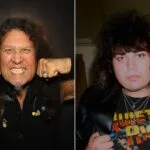


Glenn Hughes recently opened up about his challenging experience working with guitarist Ritchie Blackmore during their time together in Deep Purple. He shared his perspective in an interview with Louder Sound.

The bassist and vocalist described Blackmore’s difficult behavior during live performances and the band’s internal dynamics.
“When we were going down really well at shows, he would refuse to do an encore,” Hughes said. “Ritchie would have to be forced to go back on stage! He’d play behind his equipment. It was so ridiculous. You couldn’t make him do anything.”
Hughes also addressed the separation that existed within the band structure itself.
“He had his own dressing room, his own car,” he continued. “It wasn’t a band, it was us and it was Ritchie. That’s been his thing for ever. It was uncomfortable for me. I missed the family aspect of all of us together. It was a strange situation.”
These revelations provide insight into the complex dynamics that shaped one of rock’s most influential bands during a pivotal period in their history.
Hughes’ comments reflect the broader tensions that characterized Deep Purple’s Mark III era. Wikipedia reported that Hughes joined Deep Purple in 1973 as part of the “Mark III” lineup, replacing Roger Glover and joining David Coverdale on vocals after Ian Gillan and Glover left amid increasing tensions. This lineup marked a significant transition for the band, moving away from their classic Mark II formation that had produced legendary albums like “Machine Head.”
The Mark III lineup recorded the successful Burn album. Music historians noted that this marked a stylistic shift embracing progressive rock influences that were popular at the time. Despite the commercial success, the internal dynamics remained strained. Blackmore’s demanding personality created friction within the group.
Hughes has also shared more personal anecdotes about his time with Blackmore that illustrate the guitarist’s unpredictable nature. Louder Sound documented how Hughes recalled Blackmore once rigging his room with hidden speakers to play ghost noises at night, leaving the bassist genuinely frightened. The elaborate prank culminated in a séance that ended with mysterious cow mooing sounds echoing through the room. This was an eerie moment that reportedly even frightened Blackmore himself.
These incidents highlight the complex relationship between the two musicians, characterized by both creative collaboration and personal tension. The Mark III lineup, despite producing memorable music, was ultimately short-lived. Various members departed due to the challenging group dynamics that Hughes has now openly discussed.


