

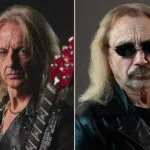




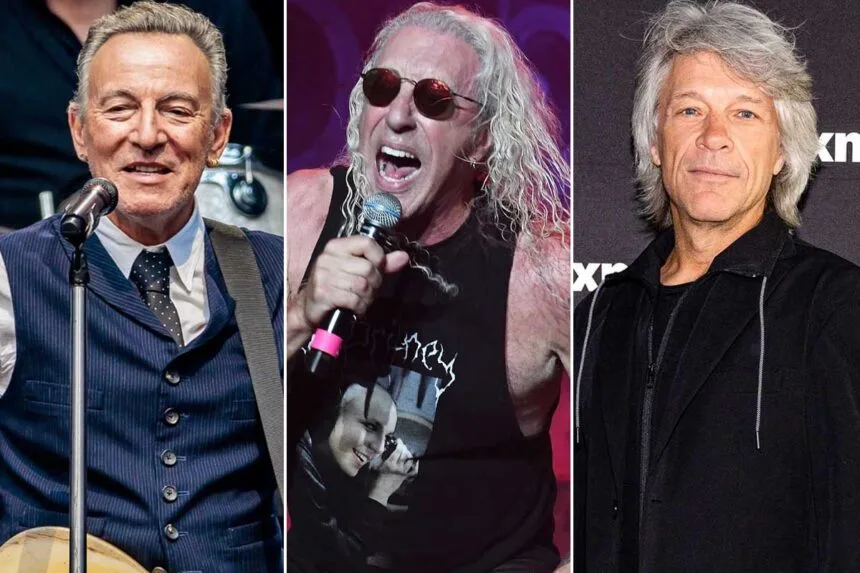
Twisted Sister frontman Dee Snider has voiced his frustration over a “10 Greatest Singers of All Time” list published by RockFM. He took to social media to argue that the selections confused great vocal stylists with genuinely great singers.

The list ranked Freddie Mercury at number one, followed by Jon Bon Jovi, Brian Johnson, Axl Rose, Bruce Springsteen, Robert Plant, James Hetfield, Kurt Cobain, Mick Jagger, and Bono. Snider’s reaction was swift and unfiltered.
“Who the f*ck put that list together? Freddie Mercury, Bon Jovi and Springsteen. The list IS great singers NOT great vocal stylists, right? (And no I don’t think I belong on a list of greatest singers.),” Snider said.
Snider then offered his own alternative names, pointing to vocalists he considers truly gifted singers rather than stylists.
“Mercury, Dio, Halford, Plant, Steve Marriott, Dickinson, Ian Gillan, Geoff Tate, Sebastian Bach, Miljenko Matijevic…shut the f*ck up! (But I don’t have a strong opinion). These are gifted SINGERS not STYLISTS,” he continued.
He also singled out several names on the original list, noting that their talents lie elsewhere. He offered a pointed observation about Kurt Cobain’s inclusion in particular.
“Cobain, Springsteen, Bon Jovi do not stand amongst them! (They are all great vocalists but not great singers). Kurt would have laughed to see his name next to Freddie Mercury’s..,” Snider added.
Snider’s comments quickly sparked discussion among rock fans online, reigniting the long-standing debate over what truly defines a “great singer” in rock music. The distinction he draws — between technical vocal ability and stylistic impact — is one that has divided rock fans and critics for decades. Many of the artists he champions are widely regarded as among the most technically accomplished voices the genre has ever produced. Several on the RockFM list, by contrast, built their legacies more on personality, presence, and emotional delivery than on classical vocal range or control.
Ronnie James Dio, whom Snider name-checks first after Mercury, is broadly considered one of the most powerful and precise vocalists in heavy metal history. His work with Rainbow, Black Sabbath, and his own band Dio demonstrated a rare combination of operatic range and raw intensity that set a benchmark few have matched. Rob Halford of Judas Priest similarly built a reputation on extraordinary range. He is capable of hitting piercing high notes that became a defining sound of heavy metal. Both singers are frequently cited in discussions of pure vocal technique in rock.
Bruce Dickinson of Iron Maiden and Ian Gillan of Deep Purple represent a generation of British rock singers who prioritized vocal power and range at a time when the genre was still defining its own standards. Gillan’s screaming upper register on early Deep Purple recordings remains a reference point for hard rock vocalists. Dickinson’s theatrical delivery and consistent live performance over decades have earned him near-universal respect among musicians. Steve Marriott, the Small Faces and Humble Pie frontman, is often cited as one of the most underappreciated voices in British rock history. He was known for a raw, soulful intensity that influenced generations of singers after him.
The vocalists Snider defends share a common thread: each built their reputation primarily on the strength and technical command of their voice, rather than on the cultural weight of their persona or the commercial reach of their music. Artists like Springsteen, Cobain, and Bon Jovi are celebrated for what they communicate and how they connect with audiences — qualities that are real and significant, but that Snider argues belong in a different category. It is a distinction that may seem academic to casual listeners, but carries considerable weight among musicians who have spent careers studying the craft of singing.


