

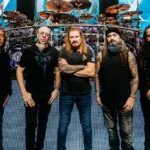





Behemoth frontman Adam “Nergal” Darski recently shared his thoughts on modern metal bands and the changing landscape of rock music. An interview featured on Metal On Tap captured his perspective.

Nergal expressed his deep appreciation for legacy rock and metal bands. He emphasized the importance of seeing them perform while they’re still active. He explained his perspective on the current state of the music industry and newer acts.
“Every time Guns N’ Roses are in town, I’m up and I always go and check it out. With all those legacy bands, be it Guns, be it AC/DC, be it fucking Metallica, [Iron] Maiden, in the first place I’m a fan of their music. I collect their records. I’ve always been a fan [of those bands], as far as I remember,” Nergal said. “And I always tell whoever I talk to, man, just go and see those bands. Buy tickets and go and see [them play], because the time is flying.”
He highlighted the urgency of experiencing these iconic acts before they’re gone. The era of major arena rock bands is gradually diminishing.
“It’s gonna be in a blink of the eye that Metallica is no longer, fucking Maiden is no longer. You would be, like, ‘Oh, shit. I should have gone and gone and seen them.’ Yeah, you fucking should. So every time those bands come across Poland or wherever I have a chance, [I] fucking go and embrace that because this era is getting to an end,” he continued.
Nergal admitted his disconnect with contemporary acts when discussing newer bands like Parkway Drive, Avenged Sevenfold, and Sleep Token.
“I don’t know what Parkway Drive is. I don’t know what Avenged Sevenfold is. I don’t know what — who is Sleep Token? It’s not me. It’s not my DNA. I mean, I don’t fucking get it. It’s probably good music. It’s all well played and big productions and stuff, but once those giants leave the earth, leave the stage, let’s put it that way — I’m lonely. There’s nowhere to go,” Nergal concluded.
Nergal’s comments highlight a significant generational divide within the metal community. The industry continues to evolve with new bands pushing the boundaries of the genre. While legacy acts remain his touchstone, the modern metal scene has developed in directions that don’t resonate with all veteran musicians. Understanding the context of these newer bands provides insight into why Nergal’s perspective, though dismissive, reflects a broader conversation about metal’s evolution.
Avenged Sevenfold has become one of the most influential modern metal bands, according to Wikipedia. The band evolved from their metalcore roots to create a diverse sound. This sound encompasses traditional heavy metal, hard rock, and progressive metal elements. Their willingness to experiment with different styles has earned them considerable commercial and critical success, making them a defining force in contemporary metal.
The modern metal scene has expanded significantly beyond the traditional boundaries that defined Nergal’s formative years. Bands such as System of a Down, Slipknot, Deftones, Tool, and Avenged Sevenfold have shaped the sound of modern metal, as noted by Anti Music. These bands continue to attract new players and listeners, demonstrating that the genre remains vibrant and evolving despite the aging of its original pioneers.
Sleep Token represents an even more experimental approach to metal. The band has carved out a distinct niche within modern metal by blending metal with progressive and alternative elements. Their music is infused with emotional, atmospheric, and often experimental approaches. This genre-blending strategy has attracted listeners who appreciate both technical skill and mood-driven compositions, positioning Sleep Token as part of a new wave of metal innovation.
The contrast between Nergal’s reverence for legacy acts and his unfamiliarity with contemporary bands underscores a fundamental shift in how metal is being created and consumed. The Behemoth frontman remains committed to honoring the titans of rock and metal. The genre itself continues to evolve through artists who draw inspiration from multiple musical traditions. Whether this represents progress or fragmentation remains a matter of perspective within the metal community.


