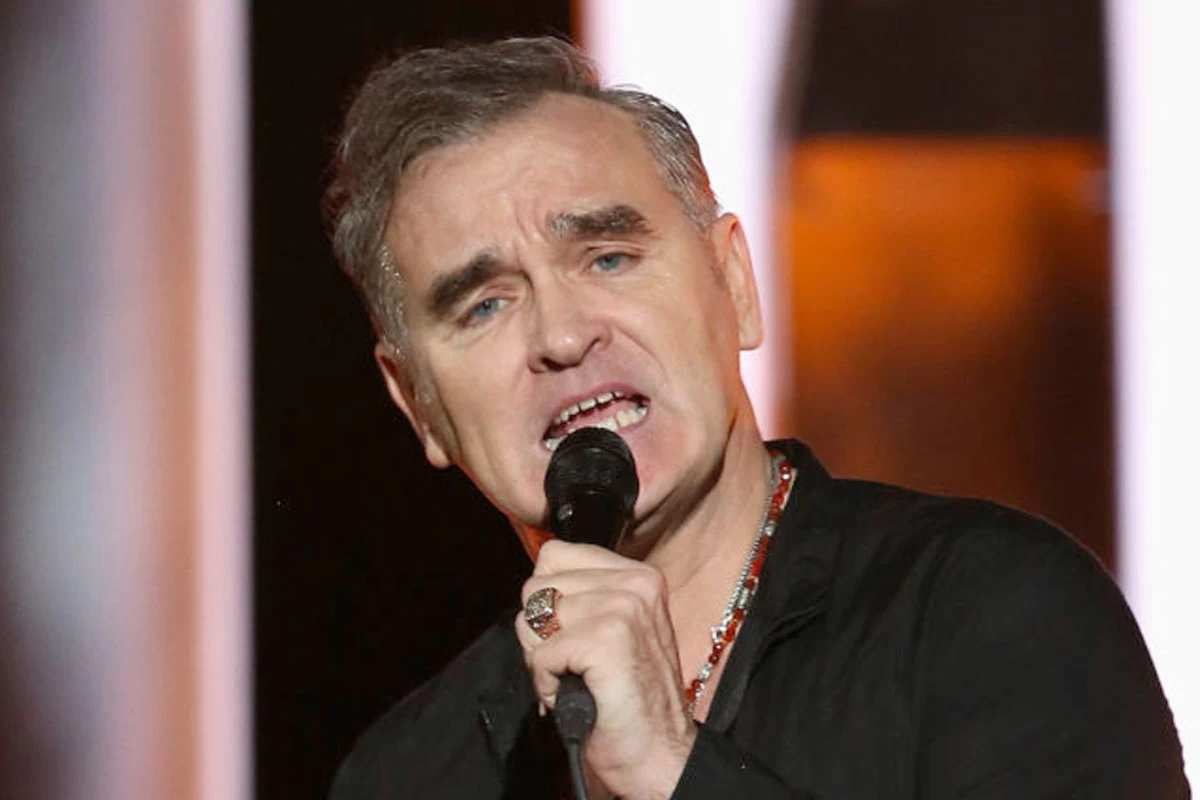




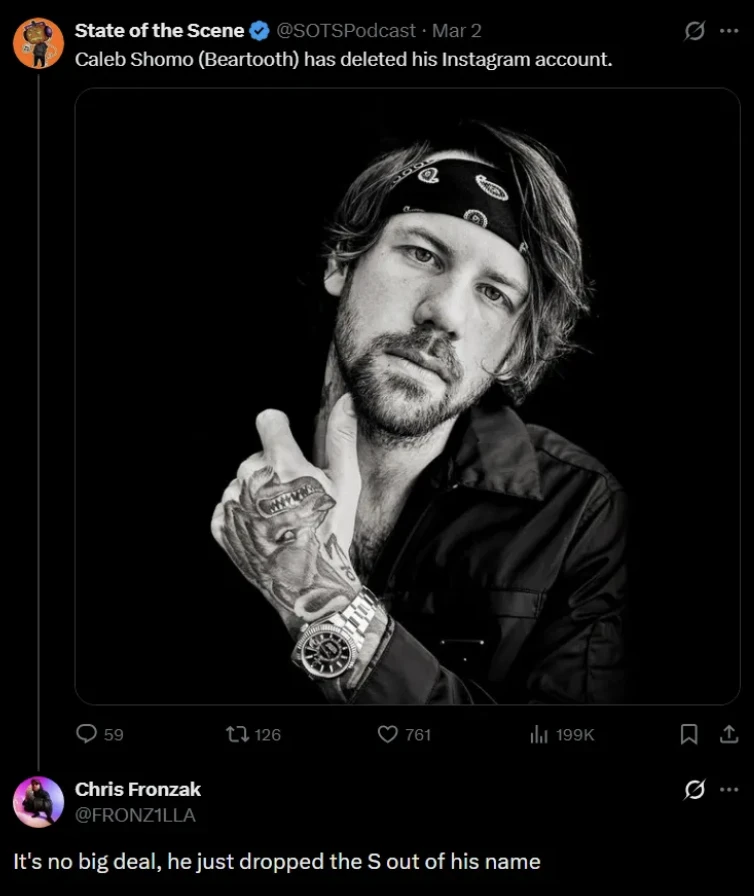
Attila vocalist Chris Fronzak recently issued a public apology regarding his controversial comment about Beartooth frontman Caleb Shomo deleting his Instagram account, as reported on X. The remark, a pun on Shomo’s last name implying “homo,” drew backlash for its homophobic undertone amid rising sensitivity to such language in metalcore circles.

Fronzak made a wordplay joke about Shomo’s name when news broke about the Beartooth singer deleting his social media account. The apology came after this incident. Shomo, known for his raw lyrics on mental health struggles in songs like “In Between,” had gone silent online, sparking fan concern.
“I would like to formally apologize for my tweet about Caleb Shomo,” Fronzak said. “I meant it as a joke, but it didn’t come across that way. I don’t know what he’s going through at the moment, but I wish him the best. The world has too much hate rn & I don’t want to add any fuel to that fire.”
Fronzak further explained his perspective and acknowledged the impact of his words.
“People will probably twist this into more negativity, but I am being honest,” he continued. “I meant it as a joke, not a jab at gay people. I personally thought it was lighthearted but I suppose that’s subjective. From my perspective- I get death threats daily for over a decade. People call me horrific things & make up terrible stories. Horrible stuff every day. My perspective is skewed, the internet has desensitized me so I thought it was a 1/10 light joke.”
The vocalist concluded his apology by acknowledging the subjective nature of humor and promising to be more thoughtful in the future.
“The reality is, people are struggling in their own ways, and jokes are subjective,” he said. “You never know what someone is going through. Therefore, I am sorry, and I will work towards thinking about things deeper before I just word-vomit shit into this bird app. Love yall.”
This incident highlights the ongoing tensions within the metalcore community regarding appropriate language and behavior. This is particularly relevant as the genre continues to evolve and attract more diverse audiences.
Attila, formed in 2005, has built a reputation as a party-core band that often pushes boundaries with crude humor and provocative lyrics. The band has faced similar controversies throughout their career, including past accusations of insensitivity that have divided fans and critics alike. Their approach to music and public statements has consistently generated debate about the line between edgy entertainment and harmful rhetoric.
Beartooth, on the other hand, represents a different facet of the metalcore scene. Fronted by Caleb Shomo, the band has gained recognition for addressing serious topics like mental health, depression, and personal struggles through their music. Shomo’s openness about his own battles with mental health has resonated with fans who find solace in the band’s honest and vulnerable approach to songwriting.
The metalcore community has increasingly embraced discussions about mental health awareness and inclusivity in recent years. Many bands and artists have used their platforms to advocate for positive change and support marginalized communities. This shift has created a more conscious environment where comments like Fronzak’s are met with swift criticism and calls for accountability.
Social media platforms have become both a blessing and a curse for musicians. They provide direct access to fans while also creating opportunities for misunderstandings and controversies to escalate quickly. The immediate nature of platforms like X (formerly Twitter) often leads to impulsive posts that can have lasting consequences, as demonstrated by this incident between two prominent figures in the metalcore scene.