





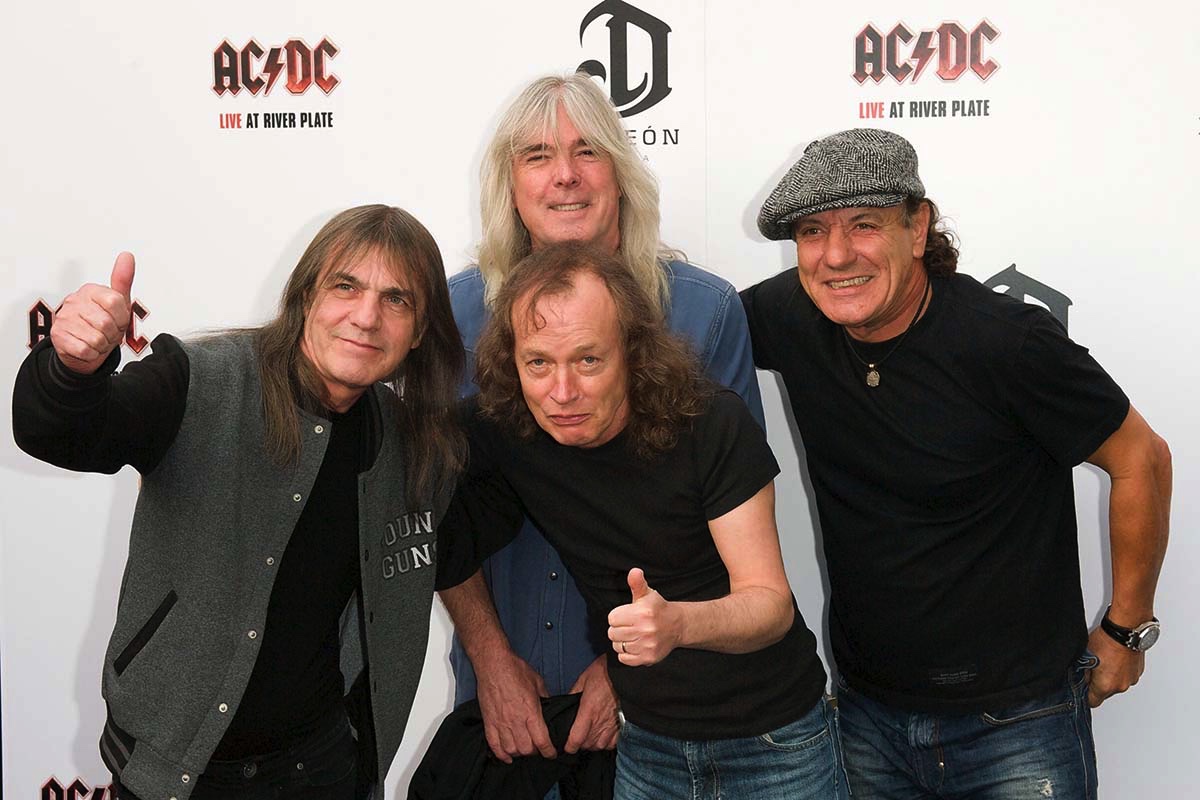
AC/DC are one of the most powerful live bands in rock history. But according to Krokus, there was a time when the Australian legends allegedly did not want to share a major festival stage with them.

The Swiss hard rock band were often called the “Alpine AC/DC” in the early 1980s. Their raw guitar sound, boogie-driven songs, and Marc Storace’s high, gritty voice made comparisons to AC/DC almost impossible to avoid.
Krokus did not fully reject the label. In fact, bassist and co-founder Chris von Rohr said they often took it as a compliment.
“We took those comments as a compliment,” von Rohr said. “But Krokus also did ballads. Compare the two bands all you like and you’ll only get half of the truth.”
Guitarist Fernando von Arb also admitted that some of their songs were close to AC/DC’s style, but insisted Krokus had their own identity.
“Some of our stuff was close to AC/DC, but we also had songs like Fire, Screaming In the Night and Winning Man that were totally different,” von Arb said.
The connection between the two bands became even stronger when Krokus recorded in London at the same time AC/DC were working on For Those About To Rock (We Salute You). Angus and Malcolm Young needed extra studio time, and Krokus agreed to overlap sessions so AC/DC could finish their album.
Von Rohr later said there was no bad feeling from the Krokus side.
“There was no tension between the two groups of musicians – certainly not from our side,” he recalled.
But the situation changed around the 1981 Monsters Of Rock festival at Castle Donington. Krokus believed they were supposed to play the event, where AC/DC were headlining. Then, according to the band, they were removed from the bill.
Singer Marc Storace later claimed AC/DC or their management did not want Krokus on the same stage.
“We had been told that we would be playing Doningtom, and then that we were not because AC/DC’s management didn’t want us,” Storace told Sounds. “And then it was that it was AC/DC – the band – who kicked us off. It showed that they were worried we might have been too strong to have us play before them. And obviously I like the sound of that.”
That claim became one of the most interesting stories in Krokus history. Whether AC/DC personally blocked them or whether it came from management, Krokus clearly believed they were seen as a threat.
At the time, Krokus were gaining serious momentum. Their 1980 album Metal Rendez-vous had raised their profile, and the band were becoming popular with hard rock and heavy metal fans. Their sound was close enough to AC/DC to invite comparison, but strong enough to make the situation uncomfortable.
There was also another strange connection between the bands. For years, there were rumors that Storace had been invited to audition for AC/DC after Bon Scott’s death. Storace later clarified that there was no direct contact from the band, only an indirect invitation through a sound and lighting company connected to both groups.
“There was no direct communication, just an invitation from the same light and sound company shared by both bands,” Storace said. “I was happy with the way things were going for Krokus; promoters wanted us everywhere, and I didn’t want to live in Australia. At the time, AC/DC were pretty much on the same level as us, and when they lost Bon I considered that put us ahead of them in the game – though not in any spiteful way.”
Krokus were also hit by an unlucky timing issue involving AC/DC. They had planned to call their next album Long Stick Goes Boom, with the title track opening with a cannon sound. But AC/DC used a similar cannon concept for For Those About To Rock.
“A photo shoot for our cover had already taken place in Solothurn, with the band surrounded by those ancient weapons,” von Rohr said.
Krokus eventually backed down and renamed the album One Vice At A Time.
The full story shows why the “Alpine AC/DC” nickname was both useful and damaging. It helped Krokus get attention, but it also placed them directly in AC/DC’s shadow. And according to Krokus, that shadow may have caused problems when they got too close to the real thing.
For Marc Storace, the Donington incident suggested that AC/DC did not want to face a band that was becoming too strong in the same lane. For fans, it remains a fascinating what-if moment: what would have happened if Krokus had played right before AC/DC on one of rock’s biggest stages?


