
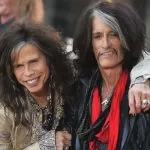


Steve Brown recently addressed allegations made against him following comments from Ace Frehley’s longtime friend. He shared his perspective on their collaboration in a statement on the Denim and Leather Rock and Metal Podcast.

Brown’s comments came after Peppy Castro, Ace Frehley’s mentor and lifelong friend, claimed that Frehley was angry with Brown before his passing. Brown responded by detailing their working relationship and the projects they had developed together.
“I sent Ace a couple of ideas which were Walking on the Moon, Fighting for Life, Cherry Medicine. I think I had some constantly cute, a couple other things. And I sent him, sent him these rough, you know, finished things, you know, they were kind of, you know, Walking on the Moon had a lot of what’s on the record,” Brown said. “And I sent it to him. And about three months later, I kid you not, dude, I’m getting out of the shower, I’m dripping wet, and my phone rings and I see it. And the phone, it says, it says Paul Frehley. And I’m like, holy shit, he’s finally calling.”
Brown described the enthusiasm Frehley showed for their collaboration during that initial phone call.
“And I pick up the phone, he goes, hey Steve, what’s up? It’s Ace. He goes, I’m listening to these ideas. He goes, this stuff’s great. And he goes, and then immediately, he starts going into, and Walking on the Moon wasn’t called Walking on the Moon, it was something else. And he was like, yeah, we’re going to change the title. I got the hook. It’s called Walking on the Moon. That’s going to be the title of the record. Blah, blah, blah. And he talks for like five minutes, and I’m just sitting there going, this is awesome,” he continued.
Brown went on to detail their creative process and the bond they formed while working together.
“And, you know, it was really cool because we hadn’t even gotten together, but already there was a common connection. And I could tell, he was so excited. And then he just goes, he goes, when can you come over? Because Ace is living in Jersey. I’m in New Jersey. He lives about 45 minutes away from me. So about five days later, I went to his house, and we finished writing the lyrics and the melodies for Walking on the Moon. And actually that first day, we did 90% of the vocals that are on there,” Brown said.
He described Frehley’s dedication to their work. He noted how the guitarist continued working even after their session ended.
“And then later that night, after the first time we worked together, later that night, he went down in the studio. He was so excited, he couldn’t sleep, that he went down in the studio and he wrote the bridge and recorded it himself. And then what I had to do was cut it up and move it into where it is now. And basically, you know, that first week, we had that song done. And then I did a mix of Walking on the Moon. I sent it to the record label, Monarch Heavy, in New York City, and they flipped out. Everybody flipped out,” he continued.
Brown reflected on their personal relationship and the gifts Frehley had given him.
“It was an incredible time. And we became so close and had so much fun making the record. He would come here and work. I still have a hard time believing that he’s gone. And, you know, his spirit’s here. He graciously gave me a couple of guitars. You know, when we finished the record, he gave me his Les Paul that we used that he would keep here. And he said, I want you to have this because, you know, I know we’re going to be making a lot more music and I love you. And it was just really, really incredible,” Brown said.
He concluded by discussing their future plans that were cut short by Frehley’s passing.
“And, you know, we had a lot more music left to make. And I have a bunch of ideas that were going to be on the next record. You know, he was working on Origins 3 with his old engineer producer, Alex Saltzman. And then we were going to continue working on what was going to be the follow-up for 10,000 volts. But sadly, that’s not to be. So God bless you, Ace. We miss you,” he concluded.
These comments came in response to Peppy Castro’s recent claims that Frehley was upset with Brown. Castro stated that Brown was “cold-shouldered” at Frehley’s wake and wasn’t invited to the funeral.
Ace Frehley’s mentor and lifelong friend Peppy Castro said, “Ace was pissed [about what Steve said about him]. Why do you think he went back to Alex? I heard that he was really pissed. And I heard that people were cold shouldering Steve at the at the, you know, he showed up for the wake, not the funeral because I don’t think he got invited to the funeral.”
The controversy surrounding Brown’s relationship with Frehley has drawn attention from the rock community. This attention is particularly notable given the guitarist’s significant impact on the music industry and his complex personal history.
The Eddie Trunk Podcast reported that Frehley passed away at 74 following injuries. This prompted heartfelt tributes from close friends and colleagues in the music industry. The podcast dedicated a special edition to honor Frehley’s memory and contributions to rock music.
Frehley’s career was marked by both tremendous success and personal struggles. KISS NEWS USA noted that despite his troubled reputation, many in the industry continued to defend and support the legendary guitarist throughout his career. His influence on rock music, particularly through his work with KISS, remained undeniable even during his most challenging periods.
The guitarist had expressed regret over missed opportunities for collaboration, particularly with former KISS bandmate Peter Criss. KISS NEWS USA revealed that Frehley was sorry he never collaborated with Criss on a post-KISS project. This highlighted his continued interest in creative partnerships even in his later years.
Brown’s detailed account of their working relationship stands in contrast to Castro’s allegations. It paints a picture of a productive and emotionally meaningful collaboration between the two musicians. The dispute over Frehley’s final sentiments toward Brown adds another layer to the complex legacy of one of rock’s most influential guitarists.