
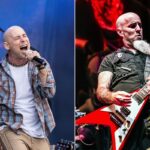


In a recent episode of the Brutality Podcast, Ex-I Declare War guitarist Evan Hughes shared his thoughts on the rising mystique surrounding Sleep Token, drawing a direct comparison to early-era Slipknot and their mysterious underground presence in the late ’90s.

Reflecting on a bootleg VHS tape he used to watch, Hughes recalled how Slipknot’s raw, chaotic performances and secretive image captured his imagination. He explained:
“There’s like a Slipknot VHS… a bootleg VHS. It’s got old Heretic Anthem, Surfacing, they’re playing in a parking lot or some sh*t. It’s super raw, super early… And it’s just got this weird vibe to it. Like they’re— I was just like, ‘Oh my god. Wow.’ Everything was so mysterious about them. And, you know, that’s kind of now what Sleep Token is doing.”
Hughes noted that Sleep Token is reviving that sense of mystique in a modern way—something he finds “really cool to see” being done again, albeit through a different artistic lens:
“I think it’s really cool to see that kind of done again in a different way.”
Although he admits the band’s recent album Take Me Back to Eden didn’t fully meet his personal expectations, Hughes clearly appreciates the aesthetic and narrative Sleep Token is crafting—much like Slipknot did decades ago:
“I just got the new album… I’m not as into it as I thought I was going to be. I think Take Me Back to Eden is probably as much on top for me. But just the way that they’re—”
This comparison adds another layer to the ongoing conversation about Sleep Token’s rapid rise and the band’s deliberate mystique—a strategy that, according to Hughes, mirrors Slipknot’s early lore-driven approach.
Sleep Token is a UK-based anonymous music collective that emerged in 2016. The group is known for its masked members and a mysterious, ritualistic aesthetic centered around worshipping a deity called “Sleep.” Their sound blends elements of metal, R&B, ambient, and pop — a genre-fluid style that has gained them a passionate following.
Slipknot became iconic for their aggressive sound, masked personas, and chaotic live shows. Early on, Slipknot members concealed their identities, creating a mysterious allure that helped build a cult-like following.


