
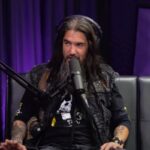






Mike Portnoy recently opened up about his difficult period away from Dream Theater. He shared candid thoughts about his replacement and return to the band in an interview with Ibagenscast.

The Dream Theater co-founder reflected on the emotional challenges he faced during his time outside the band. He also discussed his perspective on drummer Mike Mangini, who filled his role for over a decade.
“It was hard for me when I was outside the band. It was really difficult for me,” Portnoy said. “It’s like going through a divorce and then seeing your wife with a new husband. That’s a typical analogy to give, but it really is true.”
He continued to describe the pain of watching his former band from the sidelines.
“It was hard for me. It hurt, [seeing] my band with somebody else,” he explained. “So, all those years I kind of just kept it at arm’s length, but now coming back, I could have a different perspective on it ’cause I’m back in the band. And I want to know that era. I want to get to know it, like the fans know it, and I wanna be able to respect it because I know there’s a lot of fans that really enjoy those eras.”
Portnoy also addressed comparisons between himself and Mangini. He offered praise for his temporary replacement.
“Obviously Mike Mangini is an unbelievable drummer. Technically, he does things that, I’ll be the first to admit, I can’t do,” he said. “And I see people comparing us all the time. It’s apples and oranges. We maybe both have played drums for Dream Theater, but I think we’re very different styles. He’s very, very methodical, very technical. I’m more loosey goosey and flying off the seat of the handle.”
The drummer emphasized his acceptance of his own limitations. He highlighted his unique contributions to the band.
“So I think in that respect we’re different styles and I think the comparisons aren’t fair. And people say, ‘Well, Mike Portnoy can never do this and never do that.’ Yeah, you’re right. I probably couldn’t play half of those things. And you know what? I don’t care,” he stated. “I’m fine with that. I am who I am, like Popeye once said [laughs], and I’m fine with who I am. I know who I am and what I do, and what I bring to the band is more than just drums. And that’s all that matters to me.”
Portnoy concluded with respect for Mangini’s tenure with the band.
“But in answer to your question, Mangini is obviously a phenomenal drummer, and he did a great, great job all those years while the band was without me,” he said. “And I have a lot of respect for that.”
Portnoy’s emotional confession comes as he settles back into his role with Dream Theater after a 13-year absence. His departure began in 2010.
Metal Injection reported that Portnoy left Dream Theater in 2010 after 20 years and 10 albums with the progressive metal giants. His departure marked the end of an era for the band he co-founded. It left fans wondering if he would ever return to the group that made him a household name in metal circles.
The search for Portnoy’s replacement became a highly publicized process that captured the attention of the drumming community worldwide. Arrow Lords of Metal noted that Mike Mangini ultimately won the position after beating out renowned drummers including Marco Minnemann and Virgil Donati in a rigorous three-day audition process. The process was filmed for the documentary “The Spirit Carries On.”
During his time away from Dream Theater, Portnoy remained active in the music scene. He worked with various projects and bands while his former bandmates continued their journey with Mangini behind the kit. Brave Words revealed that Portnoy has been reflecting on his career choices and the pressures that come with high-profile musical commitments. This shows a more mature perspective on his place in the metal world.
The reunion between Portnoy and Dream Theater represents a significant moment for progressive metal fans who have long hoped for the original lineup’s return. His candid discussion about the emotional toll of watching his former band from the outside offers rare insight into the personal cost of creative differences. It also highlights the healing power of reconciliation in the music industry.


